Lobga Rangzen’s Self-Immolation in New York and the Roots of China’s New “Ethnic Unity” Law
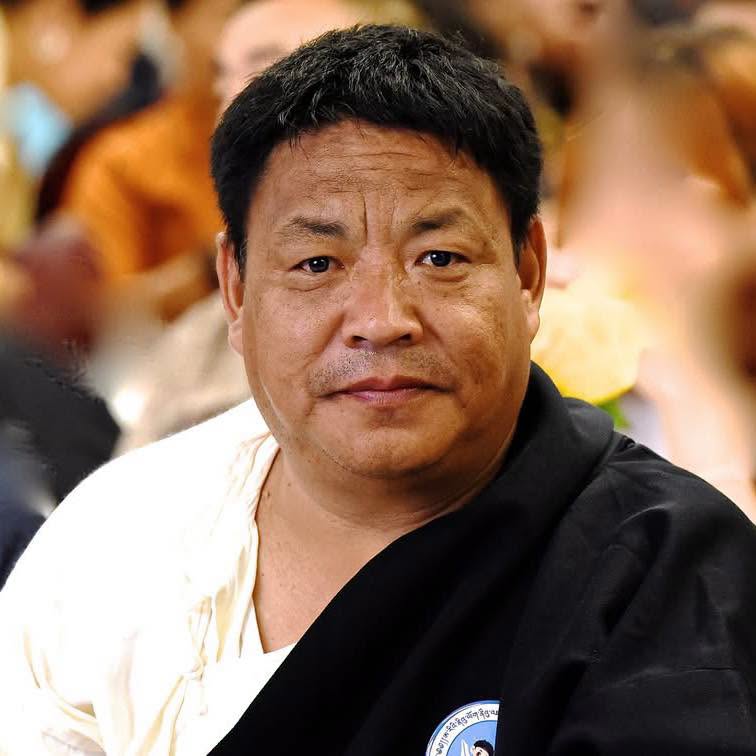
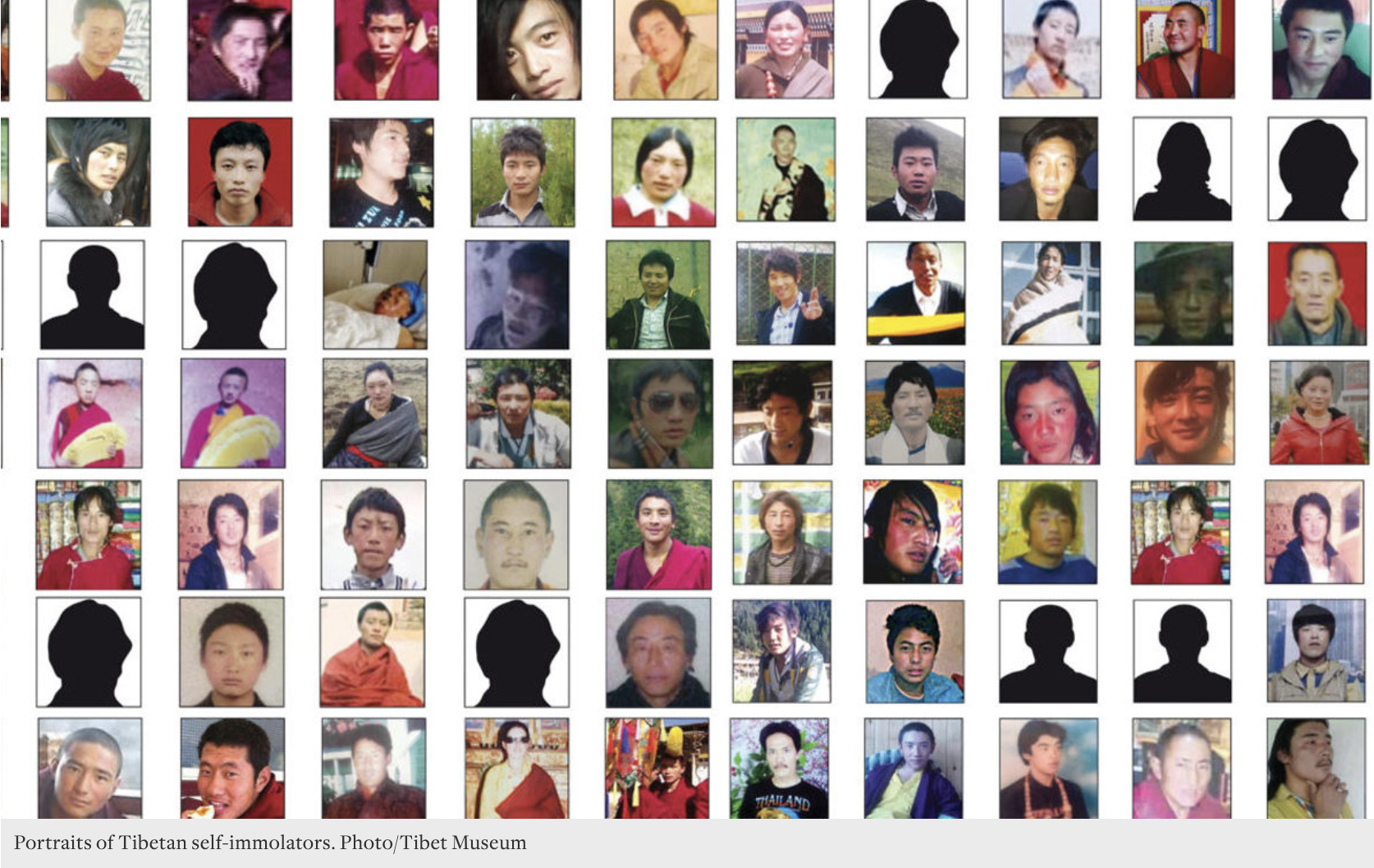
On July 2, 2026 Lobga Rangzen walked toward the United Nations carrying the Tibetan flag, scattered flyers reading “Free Tibet” and “China out of Tibet,” and set himself on fire. He was protesting China’s new law on “Ethnic Unity and Progress,” which went into national effect on July 1, 2026. He was 52 years of age at the time of his death. In his pre-recorded testimony, he deliberately called out China’s policies and actions in Tibet as aimed at eradicating the Tibetan people and their entire way of life. In choosing to express his protest against China’s systemic erasure through a self-immolation, he joins over 170 Tibetans who have offered their bodies this way since 1998, making him the first Tibetan to self-immolate in the United States.
Like those before him, Rangzen’s testimony makes clear that this new law is the latest assault among a series of other policies implemented in Tibet under the banner of national unity and security that have legalized the systemic elimination of Tibetan culture and identity. These laws highlight the structural nature of China’s ethnic elimination policy in favor of national hegemony. This is despite the rights of language and culture guaranteed to ethnic minorities in the People’s Republic of China’s Constitution and the Regional Ethnic Autonomy Law.
His method of protest was informed and inspired by other Tibetan self-immolations, and like them, his action was both a response to and shaped by a life of dispossession under policies rooted in China’s colonial approach to ethnic governance in Tibet. Lobga Rangzen was born Lobsang Palden to Tibetan parents in the Kardze county of Kham, Tibet in the mid 1970s. He was raised into a world radically transformed by Mao-era Chinese policies and their devastating consequences for Tibetans. These were national integration policies introduced after China’s 1950 invasion and 1951 formal annexation of Tibet. They include the “Democratic Reforms” (1953-54), the first policy China enacted after legalizing its colonial rule. The Reforms initiated state accumulation of Tibetan lands and properties through their dispossession, provoking widespread armed rebellions against Chinese occupation in eastern Tibet—beginning in Kham in 1956, then spreading to Amdo in 1958—and culminating in the 1959 Lhasa uprising. That same year, Ganden Jangtse Monastery, an institution Rangzen would one day travel into exile to join as a monk, was destroyed. While the Democratic Reforms had transferred the land and property of Tibet’s elite to state ownership, the Great Leap Forward (1958-1962) and the Cultural Revolution (1966-1976) extended that seizure to everyone else—stripping Tibetan farmers, nomads, and monasteries of their land and property altogether, while the Cultural Revolution went further, outlawing and punishing the practice of Tibetan culture and religion.
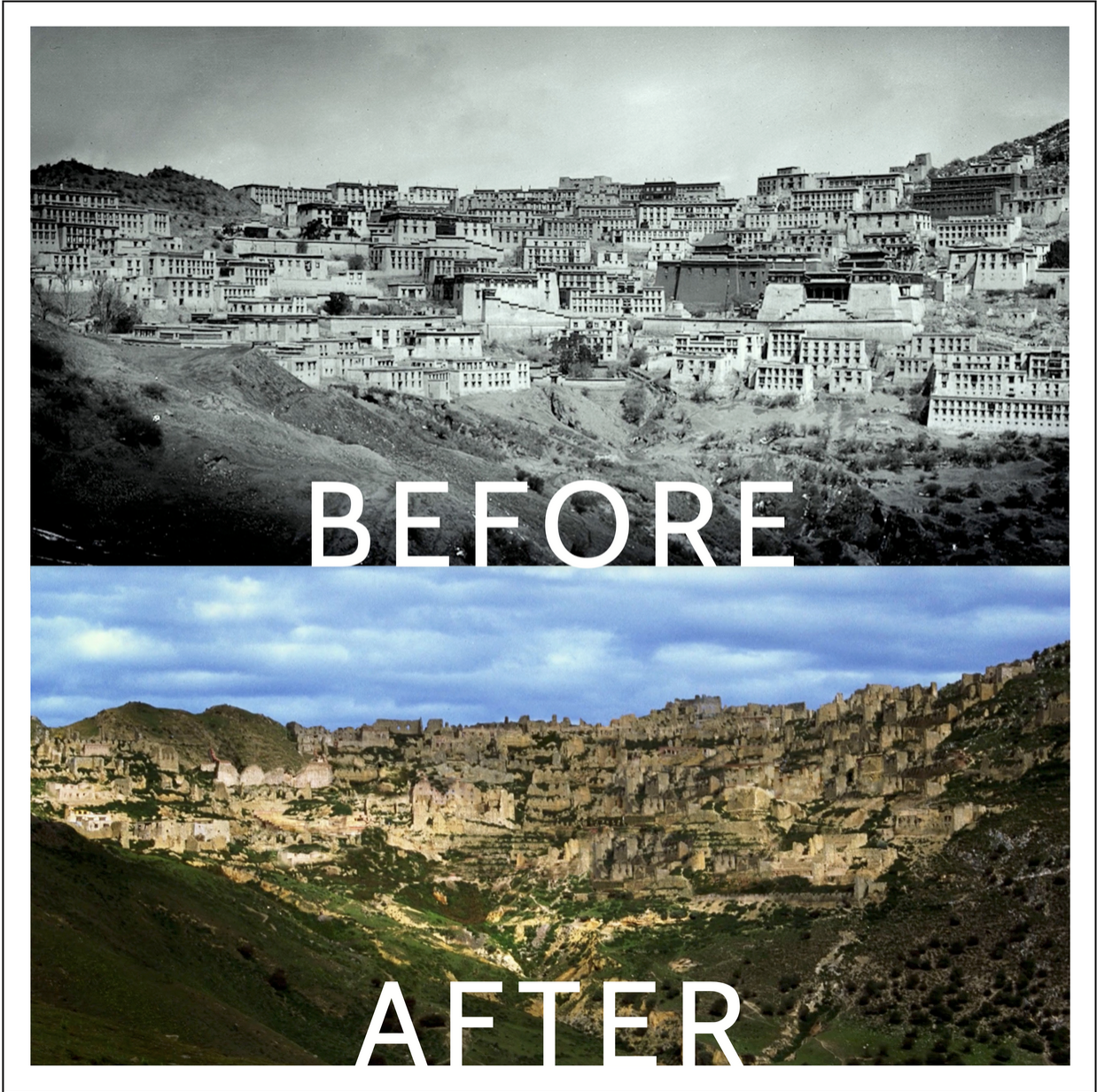
It was within this context that Rangzen grew into adulthood. Though Deng Xiaoping’s liberalization era had begun to restore some autonomy laws in Tibet and reopen its borders, change was slow. By 1990, Tibet was still reeling from the devastation of the Cultural Revolution. It was from this world that Rangzen escaped, crossing into India in 1992. He went on to join the Gaden Jangtse Monastery in its new home—rebuilt by Tibetan refugees in South India in 1969, a decade after Chinese forces destroyed the original. Just as a vital Tibetan institution destroyed in Tibet could only be reborn in exile, Rangzen too would have to leave Tibet in order to live freely as a Tibetan.
After leaving monastic life and moving to New York in 2006, Lobsang Palden became known to others as Lobga Rangzen. “Rangzen” (རང་བཙན) is a Tibetan word that translates to “independence” or “self-rule” and is used as a rallying cry of the Tibetan independence movement. In addition to working as a construction worker, a taxi driver, and an Uber driver to support himself, Rangzen also became known in the Tibetan community for dedicating himself to the cause of Tibet’s independence.
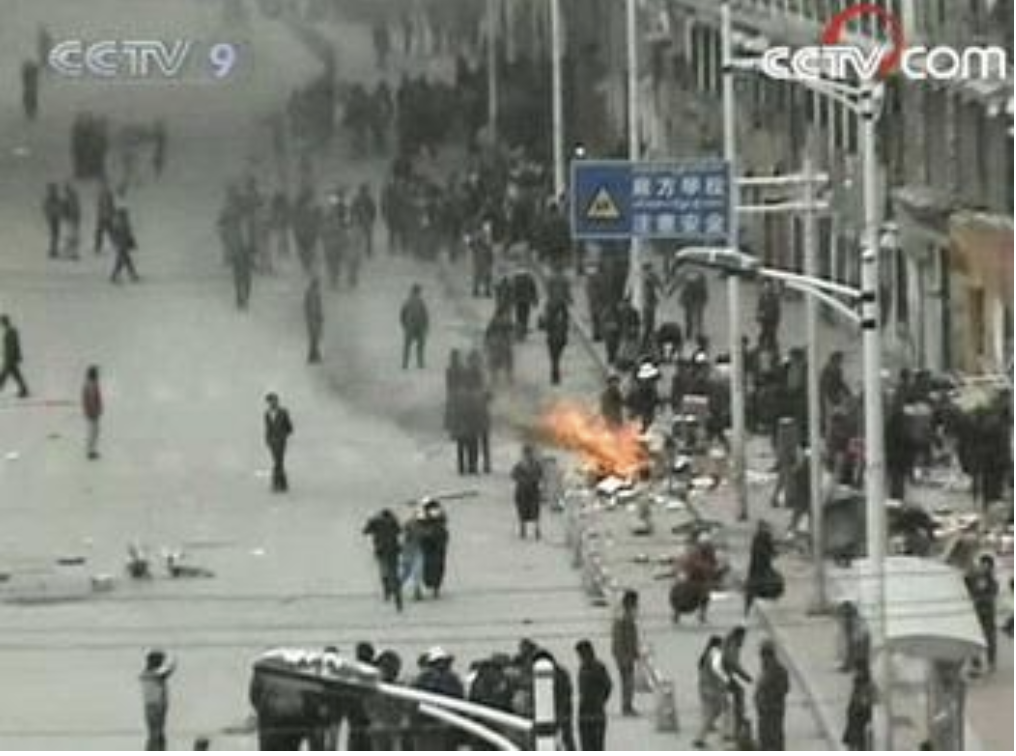
During the 2008 Lhasa uprising, which spread for four months across Amdo and Kham—regions absorbed after the invasion into the Chinese administrative provinces of Qinghai, Gansu, Sichuan, and Yunnan—Rangzen became a permanent fixture at all the major protest gatherings in New York. The 2008 uprising was in reaction to China’s “Go West” economic development policy under the Hu Jintao government. The policy brought large-scale construction projects, including the opening of a railway in 2006 that connected mainland China to Lhasa. These projects were accompanied by an influx of Han Chinese settlers: migrant workers, merchants, and entrepreneurs who marginalized Tibetans linguistically, demographically, and economically. Tibetan rioters in Lhasa targeted and burned down Chinese commercial properties.
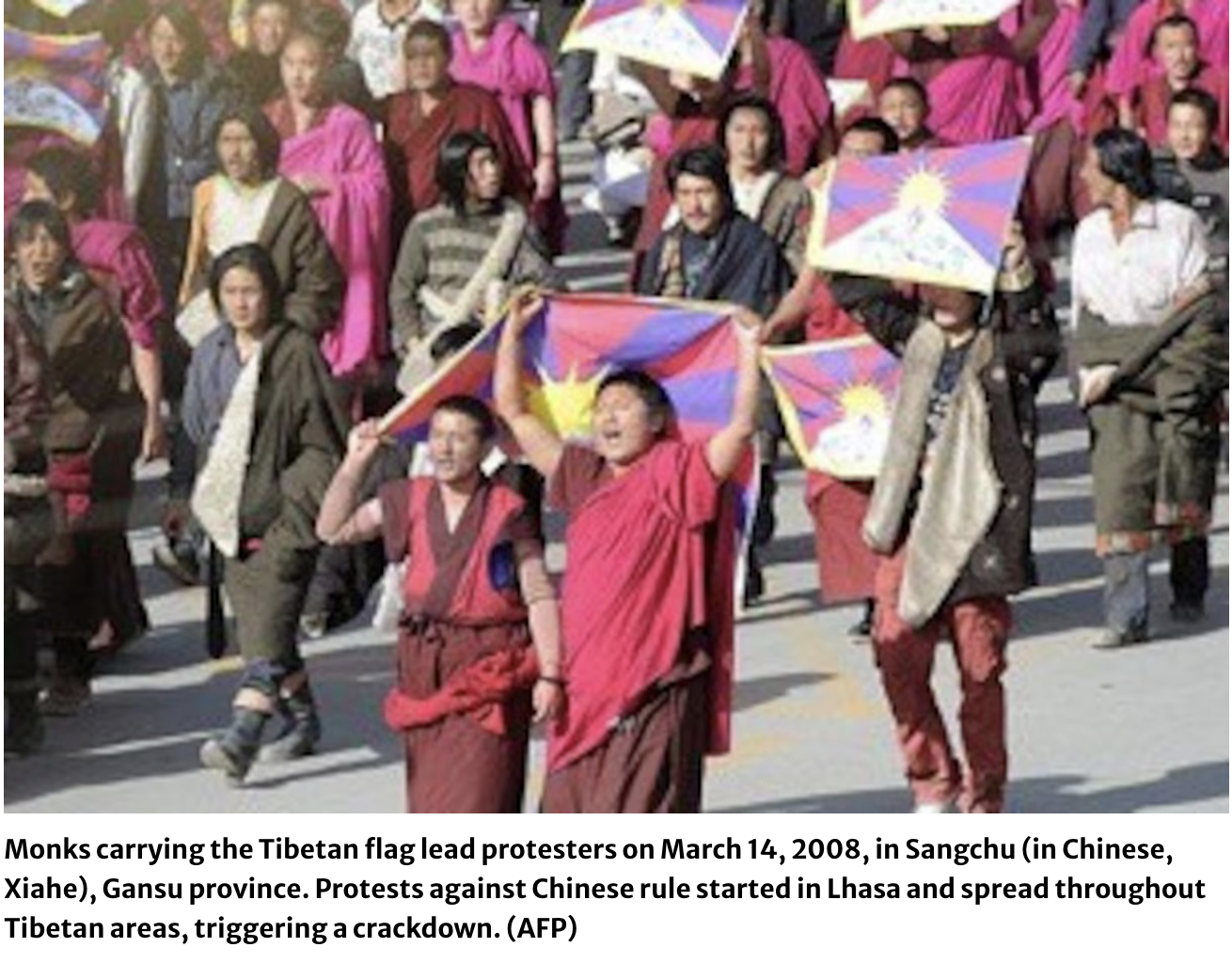
Then in 2009, Tapey, a Tibetan monk in Ngaba, Amdo self-immolated to protest China’s forced transformations and called for the return of the Dalai Lama, triggering 12 more self-immolations in 2011 and then 84 in 2012 alone, just as Xi Jinping came into power. Many of the self-immolations took place in Amdo (Ch: Qinghai), where state management of development projects intruded on not only local autonomy but also the right to language and culture. In 2009, Qinghai (Tib:Amdo) state authorities closed Tibetan-run private schools opened during Deng’s liberalization era and began phasing out Tibetan as a medium of instruction in state-run public schools—a policy which has since escalated under Xi through mandatory Chinese-medium boarding schools for Tibetan children. These policies have now been extended nationally under the new law on “Ethnic Unity and Progress,” which threatens to take away Tibetan children and criminalize parents for raising them in their mother tongue—a policy of erasure reminiscent of Indigenous assimilationist policies in North America. While China presents this new law as promoting common prosperity for all its ethnicities, Tibetans experience it as a continuation of a long process shaped by China’s enforced dispossession.
In response to the self-immolations, Lobga Rangzen and his friends founded Lhakar NY&NJ in 2014 to stand in solidarity with Tibetans in Tibet who started a cultural empowerment movement known as Lhakar (‘White or Pure Wednesday’) in Tibet in 2010. As part of this movement, every Wednesday, Tibetans celebrate their language, heritage, and culture in opposition to China’s enforced sinicization and in honor of the Dalai Lama’s soul day. On LhakarDiaries.com, I wrote about Rangzen’s group, which organized gorshey (Tibetan circle dance) in Jackson Heights to celebrate Lhakar, inviting community members to participate in joyful communal dances and laughter. The group in New York became so popular that it inspired Tibetans in other parts of the world to establish their own Lhakar Gorshey gatherings in Toronto, Dharamsala, London, Amsterdam, Paris, and inside Tibet. In spite of China’s systemic erosion of Tibetan language and culture, Rangzen and his friends invited Tibetans to celebrate their heritage, empowering and emboldening a new generation to be proud of and celebrate who they are even in the face of erasure.
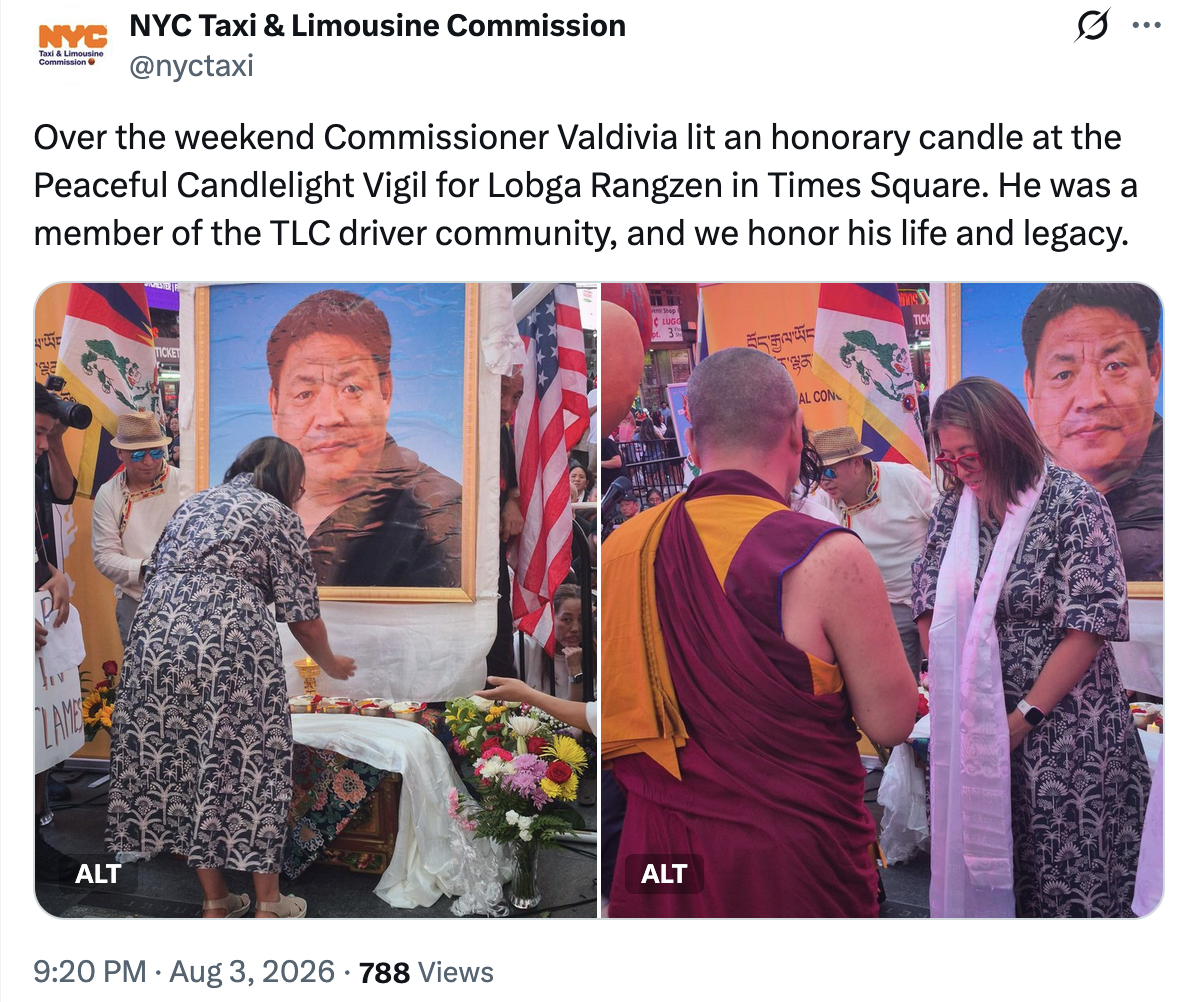
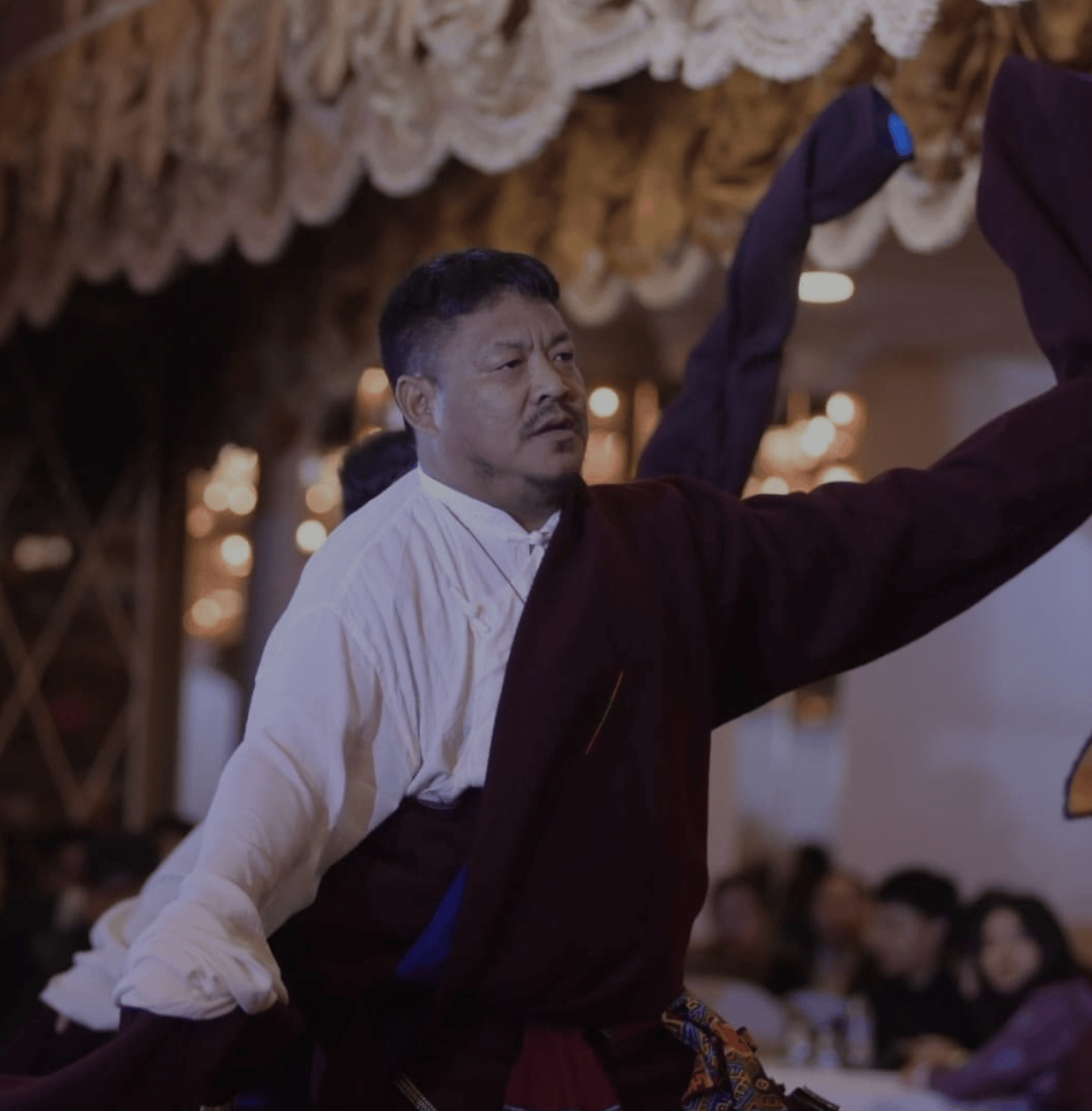
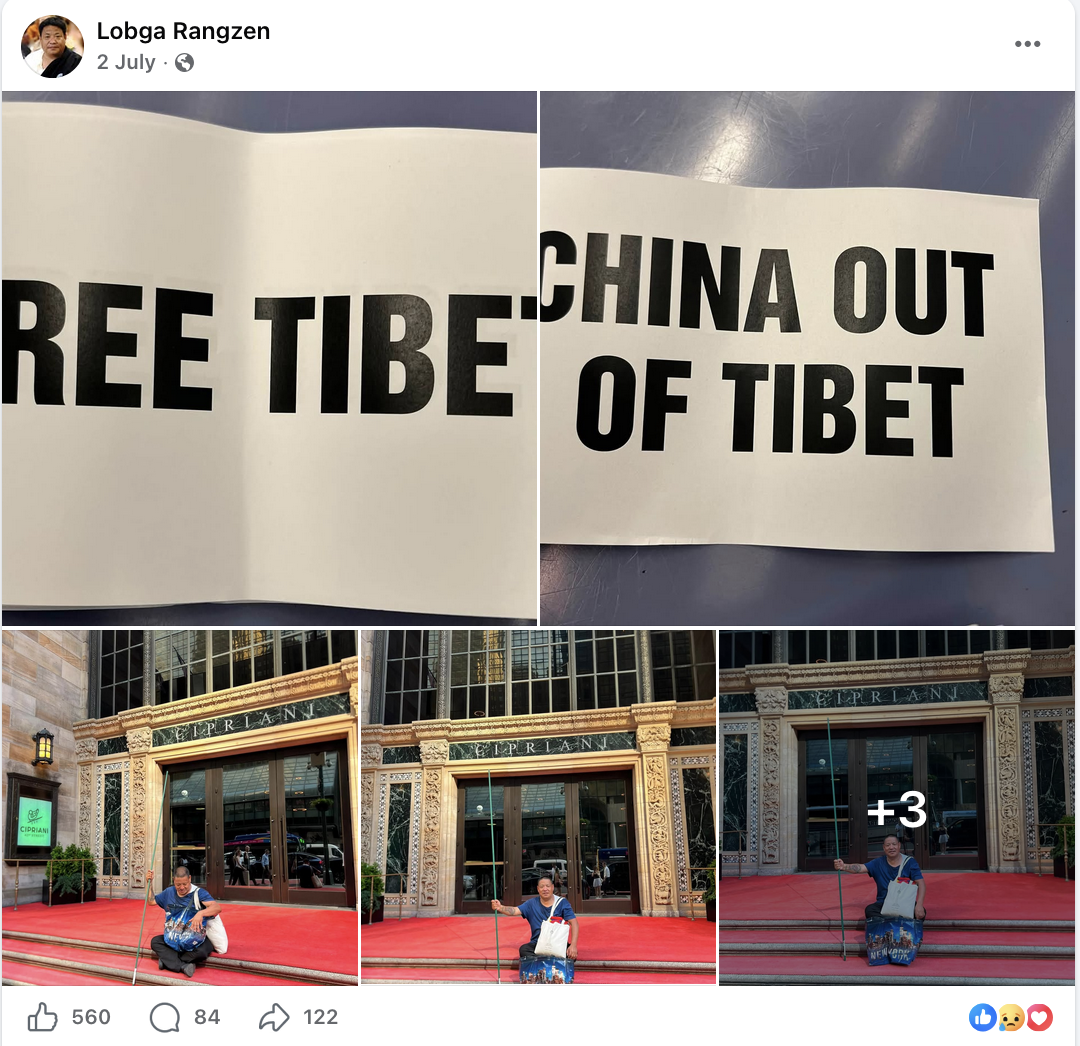
It thus came as a shock when news of Rangzen’s self-immolation began circulating on Tibetan social media and news platforms. When I looked through the timeline of Rangzen’s Facebook profile on July 2, 2026, I found a carefully unfolding record of his preparation. His first post was a new profile image featuring a portrait of himself—one that now circulates across news platforms and among protestors. The second post featured a six-second video of him walking while facing the camera, carrying a tote bag with the Tibetan flag and saying the slogan “Bhod Rangzen” (Free Tibet). The third post featured images of the flyers “Free Tibet” and “China out of Tibet,” alongside photos of him sitting in front of the Cipriani building—the same white flyers, I would later realize, that he threw into the air moments before he self-immolated. The fourth post featured a video of his testimony in Tibetan about the “big action” he was about to carry out in protest of China’s new law. In the final video, he appears in traditional Tibetan chuba, carrying the national flag of Tibet, outlawed in China, walking toward a busy intersection in front of the UN. He throws the white flyers into the air—the same gesture Tibetans use to cast prayer papers skyward during ritual, shouting “victory to Tibet!”—before he is engulfed in flames. He stands for more than ten seconds before finally collapsing, as security personnel arrive to put out the fire.
How does one explain Rangzen’s self-immolation as his chosen act of protest? He knew that this act of protest involved dying a slow and painful death, but he chose it nonetheless precisely for its fiery nature—to capture the attention of witnesses and his target audience, the UN. While I have attempted to explain his life and protest through a history of Tibetan dispossession introduced through Mao, Deng, Hu, and Xi-era policies in Tibet, words still fail to capture the full meaning and intent behind his sacrifice. In life and in death, Rangzen was a Tibetan Buddhist. In reflecting on his actions, I am reminded of the Tibetan Buddhist meditation practice called Tonglen. The practice reverses the normal human urge to run away from pain. Instead, you imagine breathing in the suffering of others and breathing out solace and healing for all. When Rangzen stood in flames for what felt like forever, I wondered if he was breathing in the pain of Tibetans while breathing out his hopes for their liberation. In the aftermath of his protest, Rangzen’s hope of renewing mobilization around the plight of Tibet has begun to be realized. As Tibetans everywhere continue to hold prayer vigils, collective funerary rites, hunger strikes, marches, and protests to honor Rangzen’s sacrifice, the world is being forced to confront the legal and political structures through which China systematically undermines Tibetans’ ability to exist on their own terms.
***
I pitched this piece two weeks ago to the editors of a major New York newspaper. My original pitch focused on the afterlife of Rangzen’s self-immolation within the Tibetan community, but the editors asked me to reframe it as an op-ed explaining China’s current policy toward ethnic minorities and Tibetans. Ultimately, they decided to go in another direction.
I’m sharing it here because it felt important to highlight not only Lobga Rangzen’s death, but his life — and how that life traces, in miniature, seven decades of Chinese policy aimed at dispossessing Tibetans of their land, language, and culture. He did not simply protest this history; he lived it, survived it, escaped it, and spent years mobilizing against it.
Really it throws light on the reasons why Logha and 170 others self immolated till date.It was wonderful peace to read and know the crucial aspect of Pawo Logha Rangzen.A man who grew up in Tibet and felt the dark policies of China during his early years life.I have read much about the Culture Revotion and Great Leap forward movement during my postgradution studying about these impact and thumzing(oppression) of Tibetans.