Tibet Film Festival Zurich 2025: Celebrating Tibetan Stories Across Borders

by

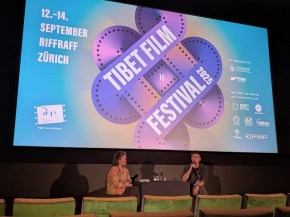
I am still reflecting on the wonderful time I had in Zurich at the Tibet Film Festival, thanks to the Tibetan organizers who have nurtured this event since 2009. This was my first time attending, and I had the honor of moderating a discussion with filmmaker Tenzin Tsetan Choklay about his collaborative work State of Statelessness.

What I did not expect was how the theme of statelessness became an avenue for learning about the Swiss Tibetan community.

When Tibetan Women Speak, Are We Heard? Challenging Etic Frameworks in Tibetan Gender Studies

by

There is a growing trend among non-Tibetan scholars—primarily those from Western or Chinese backgrounds—to analyze Tibetan women’s experiences through frameworks focused on gendered roles, marginality, or violence in relation to Tibetan men. I have written about how such analyses often overlook critical and temporal factors, such as intersectionality (Lokyitsang 2015) and the historical and ongoing violence and marginalizing policies imposed by Chinese authorities (Lokyitsang 2017a). Moreover, these scholars rarely interrogate their own etic (outsider) assumptions embedded in their own analytics.

Within these frameworks, Tibetan women’s emic (insider) scholarly perspectives are routinely sidelined—especially when some of us turn the analytical lens back on these scholars to examine the power dynamics of their positionalities, and to critique their uncritical use of categories like “modernity” and “gender empowerment.” These categories, rooted in Western Enlightenment ideals, have already been challenged by Black and Indigenous feminist thinkers as embedded in white supremacist frameworks and serving the interest of imperial projects.

Youth on Climate & Indigenous Futures, hosted by David Lam Center @ Simon Fraser University

by

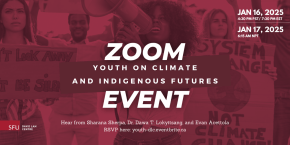
This public conversation brings Indigenous youths, activists, and scholars working across Nepal, Tibet and Canada to discuss Indigenous futures, climate change and solutions. Speakers ground the stakes of their call for action in the non-economic losses and damages in the face of climate disaster. This conversation centers around an article by speaker Dawa T. Lokitsang, “Are Tibetans Indigenous? The Political Stakes and Potentiality of the Translation of Indigeneity” to which speakers respond and discuss to consider Indigenous futures across the globe.

Exploring Tibetan Indigeneity in the Context of Globalizing Settler Colonialism, talk @ U of British Columbia (2024)

by

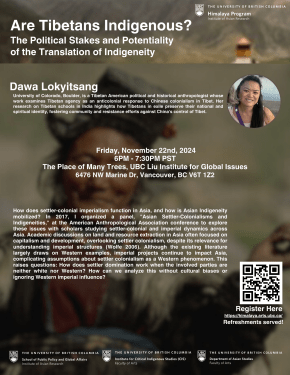
Thank you to the Department of Asian Studies’ Himalaya Program, Institute for Critical Indigenous Studies, and School of Public Policy and Global Affairs at the University of British Columbia for hosting my November 22, 2024 talk.

Based on the article “Are Tibetans Indigenous?”, this presentation examined how North American settler-colonialism literature might complicate our understanding of relationships between Asian nation-states and their ‘Indigenous’ populations. The talk included a Q&A session.

Understanding Asian Settler-Colonial Imperialisms and Indigeneities, China in Tibet

by

From the article: Are Tibetans Indigenous? The Political Stakes and Potentiality of the Translation of Indigeneity

How does settler-colonial imperialism operate in Asia, and what are the ways in which Asian Indigeneities become mobilised? To address this question, in 2017, I brought together scholars who are observing various settler-colonial and imperial dynamics and developments across Asia for a panel discussion titled ‘Asian Settler-Colonialisms and Indigeneities’ at the 116th annual American Anthropological Association conference. At that time, scholarly considerations about Asian land and resource extraction emphasised capitalism, development, and governmentality, with scant consideration of settler colonialism, even though the last remains a vital framework for understanding the structural nature of imperial projects (Wolfe 2006). Even the literature that adopted this frame drew its analysis primarily from Euro-American–centred examples, implicitly suggesting that settler colonialism is an innately Western phenomenon (Pels 1997). Yet, capitalist developments with imperial consequences continue to impact Asia at varying scales (Tsing 2005). Such contemporary developments, alongside long Asian imperial histories, including those of China, Japan, and India, complicate this assumption. This provokes questions such as: How does settler domination work when those involved in it are neither white nor from the West? How can we critically engage with this while not Orientalising this history as a cultural peculiarity or delinking it from the deep influence of Western empires?
The Dalai Lama’s Future Succession: Understanding the 14th Dalai Lama and His Formidable Contributions, a keynote lecture by Dr. Dawa Lokyitsang

by

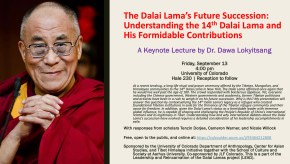
This keynote lecture by Dr. Dawa Lokyitsang on “The Dalai Lama’s Future Succession: Understanding the 14th Dalai Lama and His Formidable Contributions” with responses from Tenzin Dorjee (Columbia University), Cameron Warner (Aarhus University), and Nicole Willock (Old Dominion University) took place on September 13, 2024 at the University of Colorado Boulder’s Department of Anthropology. This lecture is part of the Leadership and Reincarnation of the Dalai Lamas Project (LEAD): A Research Network on Succession, Innovation, and Community.

What is Lhakar? How did Lhakar Diaries Begin?

by

Interview with Phayul Media, a Tibetan news platform in 2022.

I answered the following questions in the short video:

How did the Lhakar movement become a medium for dissidence inside Tibet?

Why do you think this movement struck a cord with Tibetans in exile?

Is a movement like Lhakar seemingly a milder medium and are they likely to become an alternative in the times to come?

What role does Lhakar Diaries play against the larger backdrop of the Lhakar movement?

On translation with Janet Gyatso, Dawa Lokyitsang, & Amy Langenberg, and the importance of Listening

by

This panel workshop on Translation at Northwestern University began with a short introduction of what Janet, Amy, and I (in this order) mean when we say “Inclusive/feminist approaches to Buddhist translations” and shared a list of questions to generate discussion for the audience.

The audio of the session is available for listening.

I also suggest we practice active listening and be aware of our own and other’s gendered, racialized, and classed positionalities if we truly want Tibetan women to be part of the conversation in white-dominated spaces.

Tsering Yangzom Lama, Dawa Lokyitsang and Natalie Avalos at Jaipur Lit Festival

by

Long term readers of Lhakar Diaries know that Tsering Yangzom Lama is one of our founders. So it is a pleasure to share a video of us in conversation talking about her book, “We Measure the Earth with our Bodies,” and topics such as: the centrality of land in how we as Tibetans imagine and enact ourselves in the world, colonial dispossession, the coloniality of Tibetan Studies and the extractive nature with which some of its scholars engage Tibet/ans, theft of sacred Tibetan objects in the making of expertise and museums, intentionality in Tibetan Buddhist ritual practices of compassion and how its not about just the self but about all.

This conversation took place at the Jaipur Literature Festival in Boulder, CO on September 23rd, 2023.

The Geopolitical Violence of Translating the Dalai Lama

by

“How do you translate intimacy? Recent news involving the Dalai Lama interacting with an Indian boy at a public event on February 28th, 2023 shocked the world. Over a month after the event, media everywhere ran suggestive headlines generating a firestorm of public responses on children’s rights and condemning the Dalai Lama as a pedophile. His guilt was proclaimed triumphantly as truth, but based on what evidence? A sharply cut video entirely devoid of cultural or geopolitical context.”

The following article appeared originally in The Geopolitics on April 25, 2023.