The Making of Tibet in the West: Missionary & Diplomatic Accounts, c. 18th & 19th Centuries, SECTION 1 in DTHS
This post continues my series sharing sections of my chapter in The Oxford Handbook of the Himalayas, edited by Amy Holmes-Tagchungdarpa, “Decolonizing ‘Tibetan’ and ‘Himalayan’ Studies: Empire, Ethnicity, and Rethinking Sovereignty” (hereafter, DTHS). The chapter appears as Chapter 3 in the introductory section of the volume. The PDF is available for download through institutional login on the Oxford University Press website. Click here to read my previous post, which includes the introduction section of this chapter.
***
In the eighteenth century, missionaries and imperialists from the West reached Tibet. Their arrival and interests were deeply entangled with imperial competitions in this period. Although Tibet had not fallen under the purview of British colonialism directly, by the eighteenth century, its neighbor India was an integral part of the British Empire, and successive Tibetan polities had to negotiate with this global power. While Russia and Qing China had been old neighbors of Tibet, the entrance of Britain caused new geopolitical insecurities and competitions fueled by trade and security interests. To secure British interests in the region, official overtures were made to Tibet by diplomatic missions. Unofficially, in the Himalayan borderlands, the British trained spies to undertake covert mapping operations. These interests were central to the appearance of state-supported and popular publishing related to Tibet.
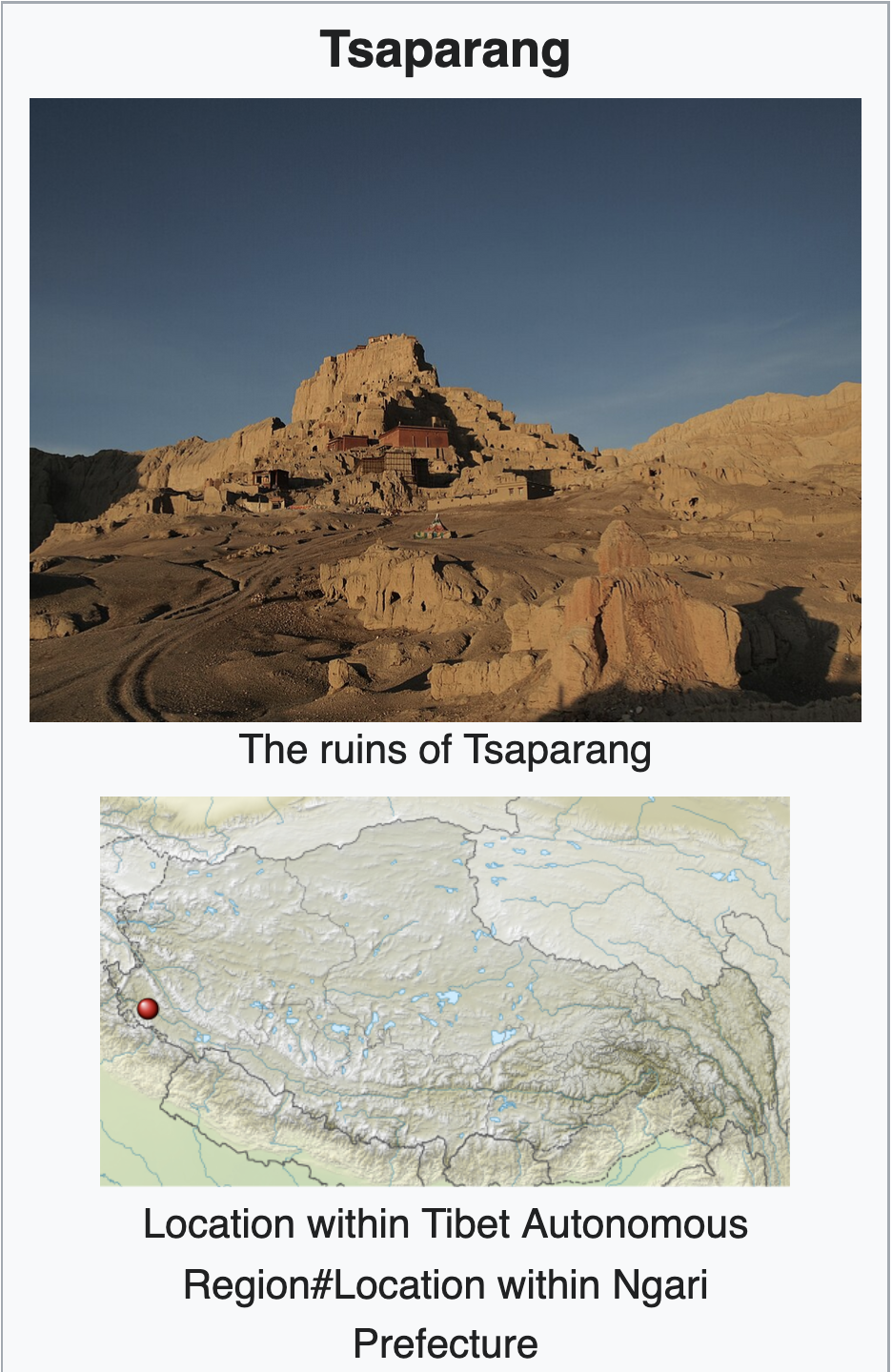
British interests in Tibet were nurtured first in the Indian Himalayas, a region of India that had a long history of diplomatic and economic engagement with Tibet. Missionary endeavors were originally sparked by the interest of religious conversion. In 1624 the Jesuits established Tibet’s first Western mission in Tsaparang in western Tibet (the capital of the ancient kingdom of Guge).7 Such activities were sponsored by and intersected with imperial competitions between the British, Russians, and Qing.8 Missionary activities in Tibet would go on to inspire colonial diplomatic expeditions that sometimes materialized in illegal map-making missions for the competing empires. Many of these figures would become famed Tibetologists in their respective countries in the West and contributed to the making of the study of Tibet.
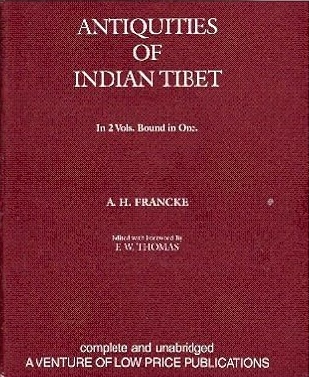
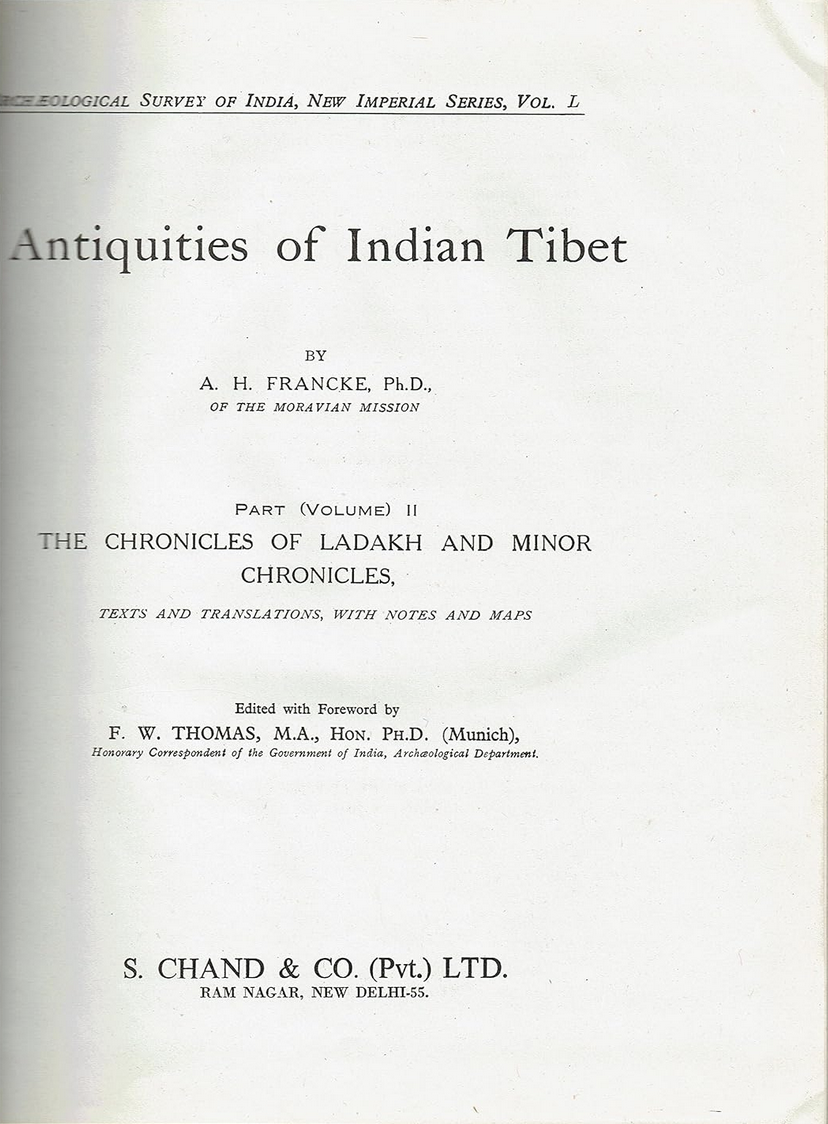
Since the primary concern of missionaries in Tibet was religious conversion, their observations tended to focus primarily on Tibetan religious life. Initially, missionaries observed Tibetan society through the framework of its religious figures, with a focus on lamas and incarnate tulkus (sprul sku), institutions, and rituals narrowly as an avenue for engaging their conversion agendas. Missionaries such as Antonio Giorgi and Ippolito Desideri studied the Tibetan language and culture as a way of carrying out religious conversion activities.9 Although Desideri was a “sympathetic observer,” he “never fully realized that the Lamaism he was studying was a form of Buddhism.”10 Gradually, missionary accounts became more advanced through an engagement with Tibetan religious and historical texts. August Hermann Francke and Karl Marx, for instance, worked on the Ladakh Chronicles, a translated history of Ladakh compiled by the Namgyal dynasty that recorded the beginnings of the first Tibetan dynasty in Ladakh to its end with the Namgyal dynasty.11 In addition to cataloguing working knowledge of the region, missionary work on Tibetan history and religion was to be used for engaging Tibetan cultural context as a method for proselytization. Missionary expeditions were often sponsored or made possible by competing imperial interests: the Qing employed missionaries to create maps of Tibet later used by British diplomats, who also engaged in their own clandestine mapping. Missionary projects in Tibet were thus deeply intertwined with imperial agendas. I intervene here by demonstrating how early scholarship produced knowledge that marginalized Tibetan sovereignty and agency.
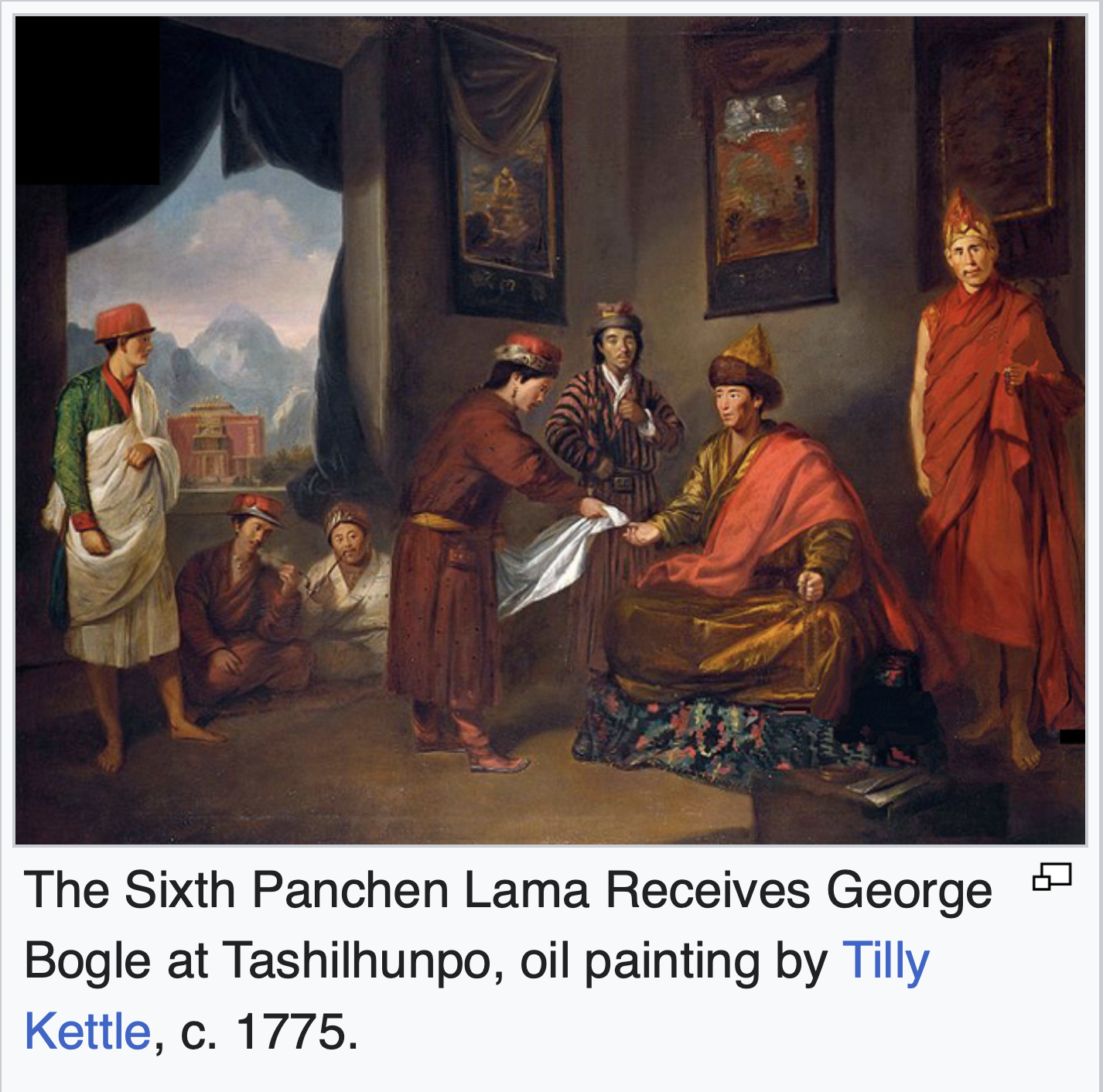
Alongside missionary work, diplomatic missions aimed at establishing trade relations also became increasingly common. These encounters inspired travel accounts and observations of Tibetan society by colonial diplomats and travelers who were spies engaged in covert map-making activities that were not approved by the Tibetan government. George Bogle (1774–1775) and Samuel Turner (1783–1784) were among the first Westerners to travel to Tibet on British missions during the early nineteenth century and “opened the diplomatic chapter in the Western encounter with Tibet.”13 Bogle entered Tibet to establish trade relations using a map by the missionary Jean-Baptiste Bourguignon d’Anville (1697–1782) that was originally commissioned by the Qing Emperor Kangxi. Bogle’s diary and travel notes focused on his interactions with the 6th Panchen Lama and Tashilhunpo monastery and portrayed Tibetans as “honest and simple people” with “no wants but those of nature” while presenting Tibetan society as a harmless theocracy that was relatively “enlightened.”14 His portrayals of Tibet would later influence the making of James Hilton’s novel Lost Horizon and shape notions of Tibet as “Shangri-la” in the West.15
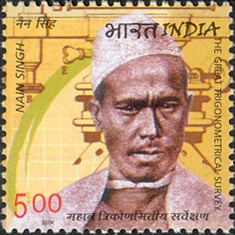
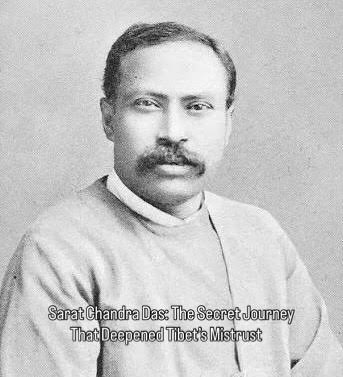
Later, the British trained Indians and ethnic Tibetans to carry out clandestine exploration in Tibet as part of the imperial “Great Game.”16 In 1865 Nain Singh Rawat (from the Bhote village Milam), working as a British spy, crossed the border disguised as a religious pilgrim to begin illegally mapping Tibet.17 Following this journey, the British sent Sarat Chandra Das, a British-trained Bengali surveyor to Tibet in 1879. Chandra Das would return to Tibet again in 1884 as a British spy to collect information on Tibetan, Russian, and Chinese activities. Das spent the rest of his career as a Tibetologist in Darjeeling and published on a large collection of Tibetan religious texts he obtained in Tibet.18 While such expeditions—both approved and clandestine—served rival imperial agendas, the individuals leading them became foundational figures in Tibetan Studies, shaping its development as an academic field in the West.
Much of this work served as introductory material to Tibetan geography and elite religious worlds more broadly for a Western audience. However, these accounts were often ahistorical, failing to recognize Tibetan societies as historically dynamic. While attention to elite religious worlds allowed for the translation of some historical accounts of specific figures, scholars rarely considered how these accounts reflected broader societal developments in Tibet. Missionaries largely failed in their efforts to convert Tibetans to Christianity, but their work nonetheless supported imperial agendas, particularly by producing cartographic and observational information used by colonial officials to gain a foothold in the region. While this body of literature, which shaped the making of Tibetan Studies as a discourse in the West, has been and continues to be relevant and insightful in the field, such developments were made possible through imperial sponsorship and served competing imperial agendas that challenged Tibet’s sovereignty. Its perspective was also narrowly focused, limiting its understanding of Tibetan society as a whole.