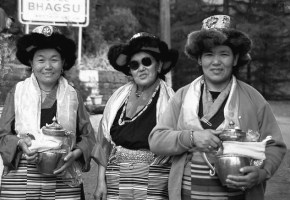
The Chang ma Ama las of Dharamsala
The following post is a section in Ch. 2 “There Is a Tension in Our Hearts” from the book Echoes from Dharamsala by Keila Diehl (2002, p57-62).
Below is guest post from Sangmo, a 17-year-old high school student, who has recently become active in the Lhakar movement in New York City. Hello people of the world, or at least the… Continue reading
Below is a guest post by Rignam Wangkhang, who is interning in the office of a Canadian Member of Parliament this summer as part of the Canadian Parliamentary Friends of Tibet Internship Program.… Continue reading
Woahh! Its been about 4 to 5 months since my last Lhakar post, apologies! I dont have any new cooking videos right now, as its been pretty hectic after getting back from India.… Continue reading
There are many reasons I’m happy to be a Tibetan-Canadian. I get to eat both beaver tails and donkey ears [phungoo amjhok]. I get to enjoy cheese so dry it’s as hard as… Continue reading
No, not that awesome Beyonce song that totally rips off Audrey Hepburn’s boho dance in Funny Face and kinda looks like a tricked out Gap commercial, I’m talking about an actual countdown to something super… Continue reading
It’s been a while since I posted so I thought I’d write a short post to update everyone on the Lhakar kind of day I had today. The Ottawa Tibetan community, although very… Continue reading
With today being February 13th, Tibet’s Independence Day, and the 100th anniversary of the day when the 13th Dalai Lama proclaimed the restoration of Tibet’s independence, it got me thinking; while Tibet was… Continue reading
Harris brings back to life documents and images from a range of colonial archives, and includes accounts and fictions published by British officers, ethnographers, soldiers and Asia-Tibet enthusiasts of that time to piece together how the myth of the exotic Tibet-an came into existence in the West. Her analysis is based on exploring the discursive formation of how the West came to imagine Tibet and its inhabitants.
Happy 2013 to all our readers out there! Now that the holidays are over it’s back to work here at LD. After a long and busy holiday I thought what better way to… Continue reading