Battle for Tibet’s Future: China Closes Acclaimed Tibetan Private School

by

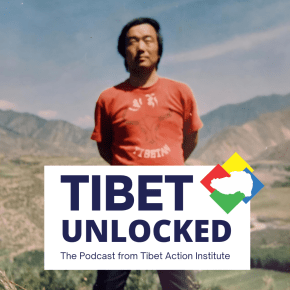
In Episode 8 of Tibet Unlocked, Pema Yoko and Tibetan education expert Dr. Gyal Lo discuss the forced closure of one of the most influential Tibetan-run private schools in Tibet by Chinese authorities… Continue reading

What is Lhakar? How did Lhakar Diaries Begin?

by

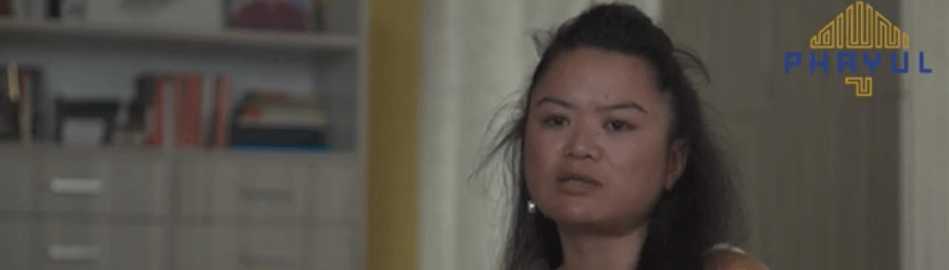
Interview with Phayul Media, a Tibetan news platform in 2022.

I answered the following questions in the short video:

How did the Lhakar movement become a medium for dissidence inside Tibet?

Why do you think this movement struck a cord with Tibetans in exile?

Is a movement like Lhakar seemingly a milder medium and are they likely to become an alternative in the times to come?

What role does Lhakar Diaries play against the larger backdrop of the Lhakar movement?

The Untold Story of Tibetan Students in the 1989 Tiananmen Movement

by

June 4, 2024, marks 35 years since the monumental protests by Chinese students and citizens demanding freedom and democracy – a powerful moment of hope and inspiration brutally crushed by the Chinese government,… Continue reading

Nyima Lhamo’s Journey for Justice

by

Nyima Lhamo’s journey, and her quest for justice for her uncle who was wrongly imprisoned by China, sheds light on the many ways China tries to control and intimidate Tibetans, including through the… Continue reading

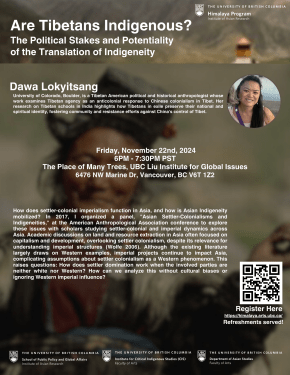
On translation with Janet Gyatso, Dawa Lokyitsang, & Amy Langenberg, and the importance of Listening

by

This panel workshop on Translation at Northwestern University began with a short introduction of what Janet, Amy, and I (in this order) mean when we say “Inclusive/feminist approaches to Buddhist translations” and shared a list of questions to generate discussion for the audience.

The audio of the session is available for listening.

I also suggest we practice active listening and be aware of our own and other’s gendered, racialized, and classed positionalities if we truly want Tibetan women to be part of the conversation in white-dominated spaces.

Tsering Yangzom Lama, Dawa Lokyitsang and Natalie Avalos at Jaipur Lit Festival

by

Long term readers of Lhakar Diaries know that Tsering Yangzom Lama is one of our founders. So it is a pleasure to share a video of us in conversation talking about her book, “We Measure the Earth with our Bodies,” and topics such as: the centrality of land in how we as Tibetans imagine and enact ourselves in the world, colonial dispossession, the coloniality of Tibetan Studies and the extractive nature with which some of its scholars engage Tibet/ans, theft of sacred Tibetan objects in the making of expertise and museums, intentionality in Tibetan Buddhist ritual practices of compassion and how its not about just the self but about all.

This conversation took place at the Jaipur Literature Festival in Boulder, CO on September 23rd, 2023.

The Geopolitical Violence of Translating the Dalai Lama

by

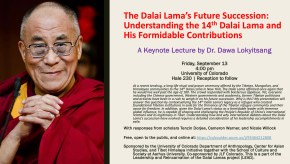
“How do you translate intimacy? Recent news involving the Dalai Lama interacting with an Indian boy at a public event on February 28th, 2023 shocked the world. Over a month after the event, media everywhere ran suggestive headlines generating a firestorm of public responses on children’s rights and condemning the Dalai Lama as a pedophile. His guilt was proclaimed triumphantly as truth, but based on what evidence? A sharply cut video entirely devoid of cultural or geopolitical context.”

The following article appeared originally in The Geopolitics on April 25, 2023.

6 Poems on Life in Exile and Of Home from “A Thousand Parallel Lives” by Tenzin Pema Chashar

by

The first poem “The Young, the Holy, and the Wealthy” is one version of my interpretation from the many stories I’ve been told about how key members of a family, who had been identified for torture/prison/thamzing, were given fair warning from those whose loyalty the Chinese tried to buy but couldn’t. 

The second poem “Here Vs. There” is something I wrote from my memory of listening to the elders talk constantly about how everything was always that much better or more abundant or brighter or bigger (even the ravens, as I recall) in Tibet. So it’s written from the vantage of someone who is about to set off for life in exile and has these hopes for how this new life/home should be.

The third poem “Wait for Me” is something I wrote from the perspective of so many of our parents and elders who had to leave their parents or children and loved ones behind as many of them had to make a hasty escape. However, many stayed somewhere close to the borders, waiting for their loved ones to join them, and not making the final descent into exile because of their belief too that the issue of Tibet would be a temporary one.

The fourth poem “Call to Arms” is about early life in exile when Tibetans in nearly every settlement called on their youth to practice ‘March Past’ every morning (with wooden toy guns) so that they would be ready if ever there was a war with the Chinese.

The fifth poem “Stone Bench” is about life in exile in the 1980’s and 1990’s when the longing for home (where the life they had left behind was home) was still palpable and a focal point of all conversations between the elders.

Tsomo’s Speech at the Tibetan solidarity rally for HHDL in Toronto 4/26/2023

by

To my fellow Tibetans, what I am going to share today will trigger some of you and I am sorry. But we know all too well as a people who have endured seven decades of colonial dispossession and displacement in Tibet and in exile, that we have no choice but to be resilient and resist.

For non-Tibetans who are outsiders to our community and culture, and who don’t understand why the past two weeks have been so traumatic for us, I want to share few things we experienced and are experiencing as a collective.

In honor of the 13th Dalai Lama’s proclamation of Independence: Neglecting the invasion of Tibet in analysis of early exile as ‘Geluk Hegemony’

by

How can we honor the complexities and challenges of our distant past without compromising collective experiences of the recent present? There is value in acknowledges the multi-dimensionality of Tibetan communities and the messiness of making communities in new places, without having to compromise the story of invasion and colonial occupation. How can we focus on what unites us as Tibetans rather than what divides us? Can we even afford such divisiveness at a time when it feels as though Tibet is experiencing an intensification of colonial incorporation and exile is stretched to its limits in diaspora with confusing political alignments that does not address Chinese colonialism?