On Being Tibetan and a(n intersectional) Feminist
Feminism isn’t about having to be a certain kind of “strong,” it’s about letting people have their own definitions of who they are and the rest of us accepting that instead of… Continue reading
After two weeks in Boudha, Kathmandu, Nepal, I became bored. I was itching to get out. Several friends on Facebook suggested I check out Sherpa country or Mustang, and then I remembered my… Continue reading
A few Lhakar Wednesdays ago, NY & NJ Lhakar team held one of the most (among many) fun celebratory event. According to their Facebook album, they wrote, Gorshey night at heart of Jackson… Continue reading
The last few decades has seen a rise in Tibetan women’s voices that has led to an increase in women’s leadership positions in the male dominated Tibetan state apparatus in exile—Central Tibetan Administrations (CTA)[1] and leading Tibetan NGOs in Dharamsala, India. This is in part due to the exile/diasporic Tibetan state apparatus’s longstanding cultivation/fostering in both its male and female de facto citizens of a desire to rise to the level of “leadership” in order to politicize Tibet and to serve an already disenfranchised community of Tibetans in exile following Chinese invasion in 1959. But what happens when Tibetan women loyal to their community desire subjectivities not endorsed by the exile government?
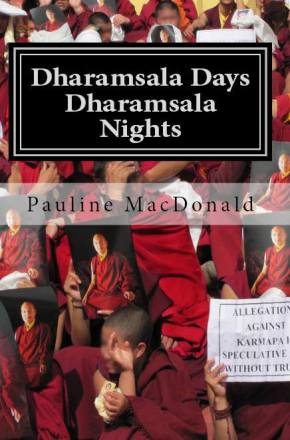
Although MacDonald’s tone is one of good intention and conviction to tell the hardships and stigmas that newcomers from Tibet face in McLeod-Dharmsala, my main problem with her book was that she decides to choose sides: she favors newcomers over exile Tibetans, and even further makes exile Tibetans, whom she calls “settlers,” the villains. Choosing a side requires categorizing the two groups as single entities at odds with each other. This doesn’t allow room for complexities within and between the group, and also ignores complexities that create tensions between the groups in the first place.
Gyatso’s talk wasn’t necessarily on the specifics of Tibetan medicine, she explores the social, cultural and political climate of the time frame she covers to understand the complexities involving the Tibetan society, demonstrating, what I call, Tibetan modernities (outside of western influence).
The struggle for visibility (documents) has always played a central role for Tibetans living in exile, especially for those living in India and Nepal. In this post, I look into this struggle that Tibetans in India face as newly arrived Tibetans from Tibet (second half) and Tibetans born and raised there (first half). During my stays in Dharamsala, India, I came across several different socio-cultural-political-economic phenomenons that have been emerging as a result of the lack of visibility for Tibetans living as, what I refer to as non-refugee refugees, in bureaucratic India. In the following, I take a closer look at one of these emerging intercultural phenomenon currently shaping the possibility of existing on paper for Tibetans especially from Tibet that bureaucratic India has yet to offer.
When some members of the Lhakar Diaries family contacted me to see if I could do an interview with her, I was more than excited since I had been thinking about it for some time-it also helped that I am currently in Dharamsala. When I contacted Dhardon la, she was more than accommodating. She took some time off her busy schedule and we did a quick interview over some tea.
The following post is a section in Ch. 2 “There Is a Tension in Our Hearts” from the book Echoes from Dharamsala by Keila Diehl (2002, p57-62).