Category Archive: Buddhism

On translation with Janet Gyatso, Dawa Lokyitsang, & Amy Langenberg, and the importance of Listening

by

This panel workshop on Translation at Northwestern University began with a short introduction of what Janet, Amy, and I (in this order) mean when we say “Inclusive/feminist approaches to Buddhist translations” and shared a list of questions to generate discussion for the audience.

The audio of the session is available for listening.

I also suggest we practice active listening and be aware of our own and other’s gendered, racialized, and classed positionalities if we truly want Tibetan women to be part of the conversation in white-dominated spaces.

Tsering Yangzom Lama, Dawa Lokyitsang and Natalie Avalos at Jaipur Lit Festival

by

Long term readers of Lhakar Diaries know that Tsering Yangzom Lama is one of our founders. So it is a pleasure to share a video of us in conversation talking about her book, “We Measure the Earth with our Bodies,” and topics such as: the centrality of land in how we as Tibetans imagine and enact ourselves in the world, colonial dispossession, the coloniality of Tibetan Studies and the extractive nature with which some of its scholars engage Tibet/ans, theft of sacred Tibetan objects in the making of expertise and museums, intentionality in Tibetan Buddhist ritual practices of compassion and how its not about just the self but about all.

This conversation took place at the Jaipur Literature Festival in Boulder, CO on September 23rd, 2023.

Samding Dorje Phagmo: The First Tibetan Woman to Begin her own Lineage

by

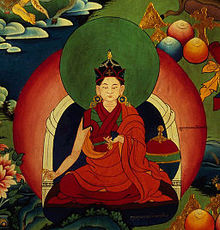
Samding Dorje Phagmo is the first lineage that was initiated and led by a Tibetan woman named Chokyi Dronma in fifteen century Tibet (2007: 1). This lineage continues to exist in present day Tibet. “She was listed among the highest-ranking reincarnation at the time of the Fifth Dalai Lama, and recognized by the Tibetan government and acknowledged by the Qing emperor” writes Hildegard Diemberger. Thus, engaging this historic figure becomes important in situating Tibetan religious approaches to gender.

Tare Lhamo and Namtrul Rinpoche: Courtship & Healing in times of (Cultural Revolution) Degeneration

by

As discussed in previous chapters of Love Letters from Golok: A Tantric Couple in Modern Tibet, Holly Gayley stresses how Tare Lhamo and Namtrul Rinpoche saw their religious engagement and activities in tandem with reviving Tibetan Buddhist culture following the destruction of the Chinese-led Cultural Revolution. Before Tare Lhamo and Namtrul Rinpoche began their activities in reviving Tibetan Buddhism during the 1980s and 1990s together as a tantric couple, they began their official courtship through letters in the 1970s. These letters from the 1970s played a crucial role, argues Gayley, in shaping the couple’s future activities that came to fruition later. The following chapters engage these letters closely to consider how the couple came to view one another and their future together as a tantric couple who would embark on healing Tibetan traumas through Indigenous and Buddhist idioms.

The Exceptional Tare Lhamo: Transcending Gender Through Agentive Means

by

This is a continuation of my project to engage historic female figures of Tibet. Tare Lhamo is especially interesting because she was born before China’s invasion of Tibet, she lived through the invasion, followed by Culture Revolution until its end, and was part of the religious cohort in Tibet who began reviving Tibetan Buddhism from the destruction of Culture Revolution. She becomes an important figure to consider when we think about different subjectivities of Tibetan women in Tibetan history. I hope you’ll find the following analysis useful.

Consumerist Buddhist

by

[Guestpost by Kunsang Palmo] I had sat with the White Buddhists for at least thirty minutes. It was a frustrating experience. I sat in silence watching the gross fetishization of Tibetan Buddhism. I… Continue reading

Ayu Khandro, the Traveling Yogini of Kham

by

Ayu Khandro was a highly regarded neljorma, yogini, in eastern Tibet, who was born in 1839 and died in 1953 at the age of hundred-and-fifteen. Unlike Sera Khandro, Ayu Khandro did not leave… Continue reading

A Gendered Reading of the Life & Times of Yogini Sera Khandro: A Critical Review of Jacoby’s Love & Liberation

by

Sarah H. Jacoby’s Love And Liberation: Autobiographical Writings of the Tibetan Buddhist Visionary Sera Khandro (2014) is a close reading by Jacoby on the life and times of Sera Khandro, a renowned female… Continue reading

When Tibetan Women ruled Tibet

by

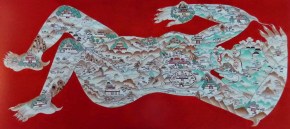
she realizes the demoness Srin, who represents the Tibetan landscape itself, is causing all the difficulties. To subdue her, they build a total of thirteen Buddhist temples, some of which still stand today in places like Bhutan (39), to pin her down on her back. Four in the inner realm of Tibet to pin her shoulder and hip. Four at the border areas, pinning her knees and elbows. Four at the boarders beyond to pin her hands and feet. And finally, one at the Jo-khang, symbolizing her heart and considered the center of Tibet (38). Thus Srin is subdued and Buddhism can reign over Tibet. Besides Buddhist domination of Srin, what is this myth really about? And why is the demoness gendered as female?

Conflict of Desires: Female Tibetan Leaders and Gender Advocacy

by

The last few decades has seen a rise in Tibetan women’s voices that has led to an increase in women’s leadership positions in the male dominated Tibetan state apparatus in exile—Central Tibetan Administrations (CTA)[1] and leading Tibetan NGOs in Dharamsala, India. This is in part due to the exile/diasporic Tibetan state apparatus’s longstanding cultivation/fostering in both its male and female de facto citizens of a desire to rise to the level of “leadership” in order to politicize Tibet and to serve an already disenfranchised community of Tibetans in exile following Chinese invasion in 1959. But what happens when Tibetan women loyal to their community desire subjectivities not endorsed by the exile government?