Of Dispersal(s) — ཡུལ་གྱར་གྱི་སྐོར།
by Tsering Dolkar Watermeyer — ཝ་་མེ་ཡར་ ཚེ་རིང་དོལ་དཀར།
Do you still hang Mao upside down?
Does that make you smile?
I am beginning to see you as if through history’s veil
Our stories have stopped growing now.
(A Letter for Drapchi, T.D Watermeyer)
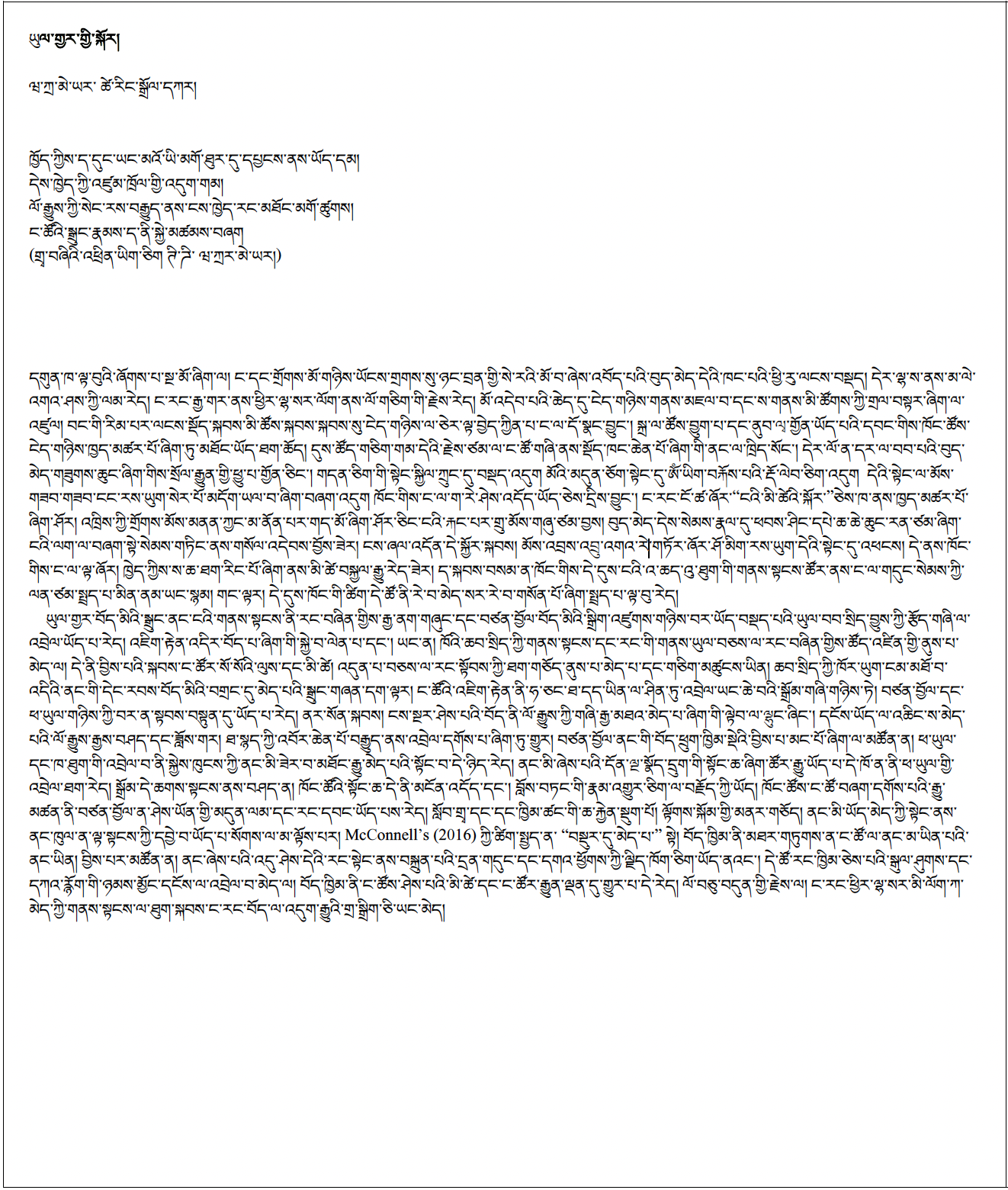
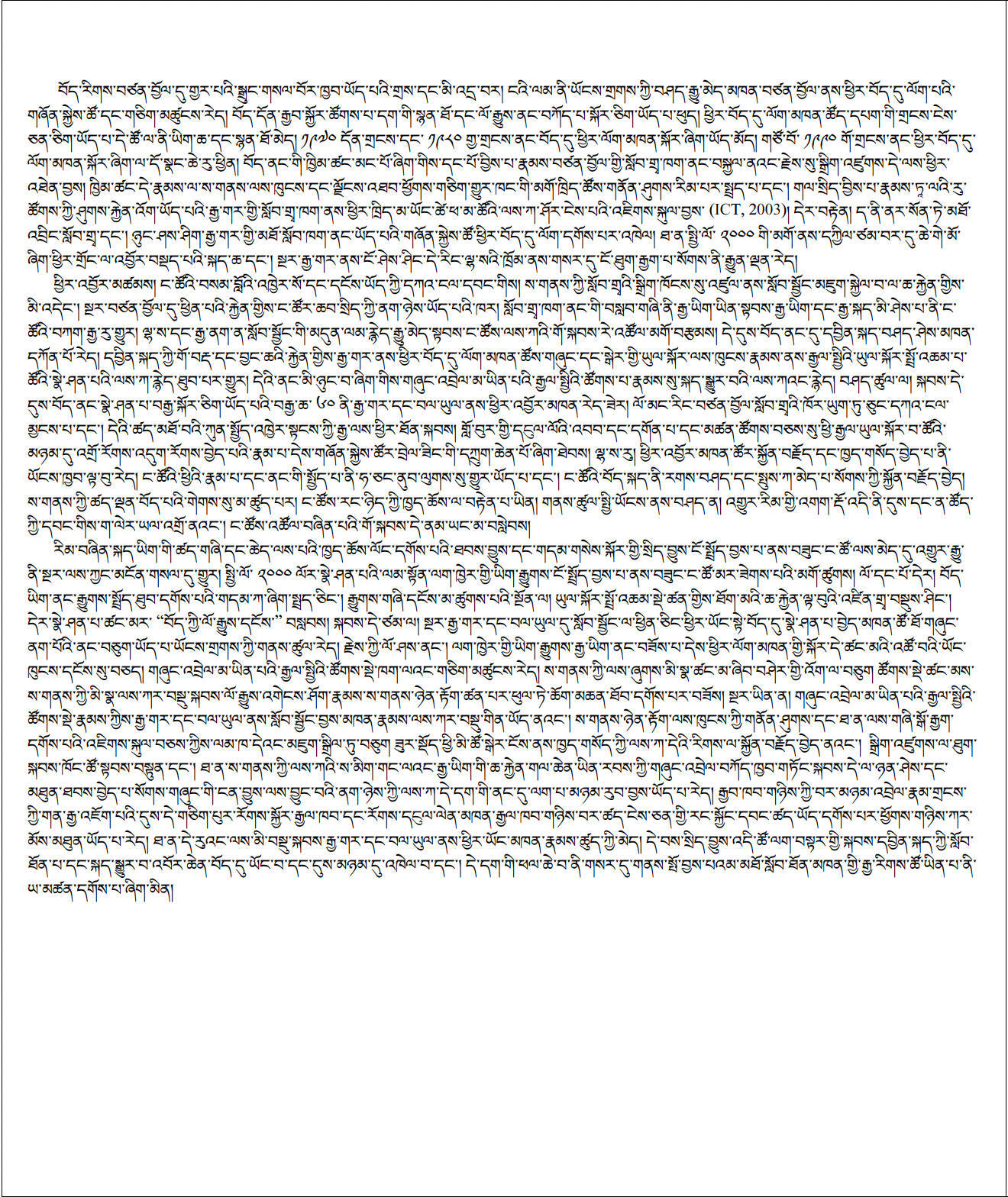
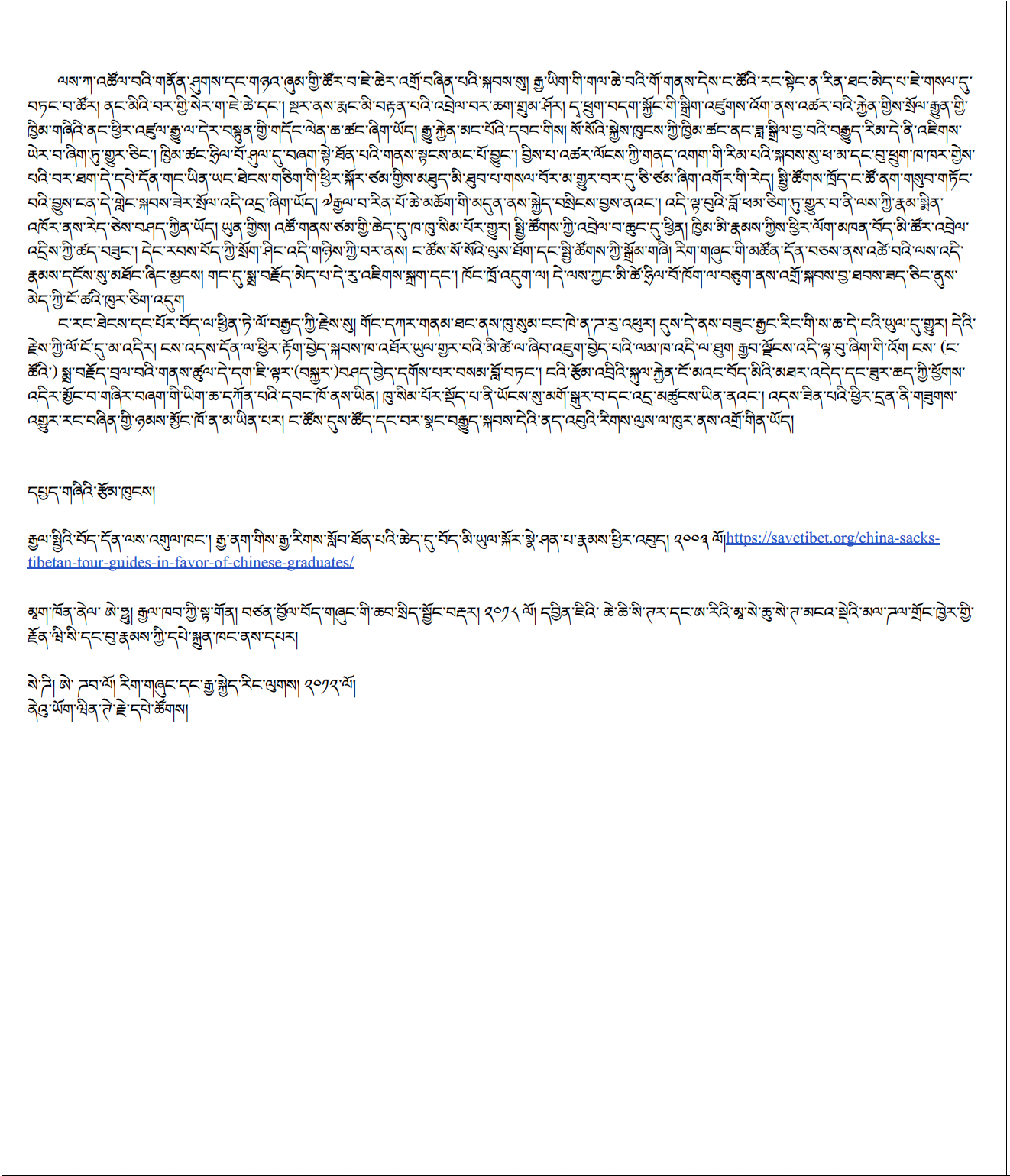
On an early wintry morning, my friend and I stood outside the home of a woman popularly known as the sera mo ba in Nyangra, less than a few miles from Lhasa, a year after I had returned from India to live in Tibet. The two of us were in a queue of locals and pilgrims in search of divine counsel. Standing in line, I noticed their occasional stares, for we must have looked comically out of place with our dyed hair and westernized outfits. An hour or so later, we were finally ushered inside a large living room. A petite, middle-aged woman wearing a traditional chupa sat cross-legged on the seat. On the table in front of her lay a flat circular stone inscribed with the letter ཨོ་ (Om) over which she carefully placed a faded yellow cloth. She asked what I wanted to know. Embarrassed, I awkwardly blurted out, “my life.” Seated next to me, my friend stifled a giggle and playfully jabbed my leg with her elbow. Unperturbed, the woman calmly handed over a modest-sized scripture and asked me to say a heartfelt prayer. Reciting the text, she sprinkled a few grains of rice and rolled the dice on the cloth. Then glancing at me she said, “You will spend your life in a faraway land.” Her words offered concrete hope at a time when there seemed none, though today I wonder whether it was an empathic response to the desperation she sensed in me.
My place in the Tibetan diasporic story is naturally tied to the existing geopolitical contestations between the exile émigré system and the People’s Republic of China. Here I am drawing attention to the natural inability to control being born as ‘Tibetan’ or its political condition and location of the self, which aligns with the lack of free will for children over decision making, our own bodies and lives. Like countless other stories of Tibetan modernity unfolding within this highly politicized milieu, our world performs to the beat of two distinct yet interconnected constructs ― the homeland and exile. Growing up, the Tibet I knew was draped in a boundless expanse of history, communicated through narratives, acts and language ‘of excess’ (Said, 2012), deprived of any tangible presence. For the many children who were wards of the Tibetan Children Village schools in exile, our immediate link to the homeland was the lack of biological families whose visceral absence was rendered curiously inanimate. Structurally, their lack was explained as an aspirational, sacrificial gesture. They left us, for exile offered better educational prospects and freedom. Notwithstanding the austere conditions of the school and its foster homes, chronic hunger and the hierarchy within based on those with and without family, to use McConnell’s (2016) ‘non’ analogy, ultimately it was our non-home home. As children, it was the life we knew and normalized even as the notion of family created its own repressed longings and idealization detached from actual experiences of familial dynamics and complexities. Seventeen years later, when circumstances compelled my return to Lhasa, I was ill-prepared for the reality of living in Tibet.
Unlike the well-established narratives of those who fled into exile, my trajectory became tied to the lesser-known tale of youths who returned from exile to Tibet. There are no documented narratives or reports of the estimated number of returnees aside from a few fleeting references in reports of Tibet advocacy organizations. While a few individual Tibetans returned to Tibet in the 1970s and 1980s, it was in the 1990s that a noticeable group of returnees came to be formed. Many families in Tibet who had initially left their children in the Tibetan exilic schools in India subsequently withdrew them from the system. The families were reacting to the mounting pressure from work units and local leadership in the Tibetan regions threatening job security if the children continued to remain in India under the influence of the ‘Dalai clique’ (ICT, 2003). Consequently, the children, by then youths in high school and a few who had graduated that were in Indian colleges, returned to Tibet. Even through the early-mid 2000s, it was not unusual to hear about another arrival in town or chance upon a new face on the streets of Lhasa, that we had once known in exile.
Upon return, we were unable to continue with our education in the local school system due to inadmissibility based on both ideological and practical challenges. Our prior exilic conditioning made us political liabilities and the fact that we could not speak or write Mandarin was a barrier since it was the main medium of instruction in schools. With no prospects of continuing education in Lhasa or anywhere else in the country, we began to search for employment opportunities. At the time, very few Tibetans in Tibet could speak English. Based on their English language skill (developed in exile), many of the returnees found opportunities in both state-owned and independently operated travel agencies as tour guides for international tourists visiting Tibet. A significant number also found work in international non-governmental organizations (INGO) as interpreters. Anecdotally, of the hundreds of tour guides in Tibet at the time, more than 60% were those who returned from India and Nepal (ICT, 2003). Emerging from years of relative scarcity in the exilic school environment and its highly disciplined setting, the sudden cash influx and hobnobbing with tourists across monasteries and nightclubs created a perfect storm for youthful recklessness. In Lhasa, popular disdain of and criticisms against returnees was widespread: our appearance and mannerisms were too western and the way we spoke Tibetan crass and unrefined. Unimpeded by local ideals of Tibetan-ness, we leaned into our difference. In the grand scheme of things, these transitional hurdles may have mellowed with maturity and time, but the opportunity to find out never came.
Increasingly it became clear that we would be rendered unemployable with the introduction of strategic and exclusionary policies couched in the language of standardization and professionalization. With the introduction of the tour guide licensure examination in 2000, the downward spiral began. During that first year, an option was provided to write the test in Tibetan and prior to the initial test, the tourism bureau organized mandatory classes where all tour guides were taught the ‘true history’ of Tibet. Around this time, it became common knowledge that a hei mingdan (blacklist) existed of names of tour guides who had previously studied in India and Nepal. In subsequent years, the licensure exam conducted in Mandarin effectively eradicated the livelihood of the entire group of returnees. Within INGOs too, the recruitment of local staff came under surveillance, requiring all organizations to submit resumes of their local staff to the Public Security Bureau (PSB) for approval. Where formerly INGOs hired staff educated in India or Nepal, the increasing pressure from the PSB and the threat of project closure ended this practice.
The expatriate community bemoaned the discriminatory practices in private. Organizationally however, they were compliant, even complicit in the structural violence perpetrated by the state including rationalization and adoption of the state rhetoric about the importance of Mandarin skills as a requirement for all local positions. Only bilateral initiatives which are development assistance provided by a donor country to an aid recipient country based on a memorandum of understanding retained limited autonomy but even there, recruitment practices no longer included returnees. Not surprisingly, the implementation of these policies coincided with the influx of English language graduates and interpreters, comprised largely of newly relocated, university-educated Han Chinese.
Alongside mounting frustration and stress to find employment, and the importance placed on Mandarin that seemed to emphasize our own worthlessness, came widening fissures within families, straining already fragile relationships. Being raised in a foster care system, the integration into traditional family structures brought its own set of adjustment challenges. In many cases, the transition into biological families became so fraught that it was not uncommon to leave home altogether. How long will it take before it becomes apparent that the literal and metaphorical distance separating parent and child during key developmental stages cannot be bridged by a singular return? Instead, the spectre of our social erasure was couched as karmic payback for turning out to be such disappointments even when raised in the presence of the Dalai Lama. Eventually self-censorship took root in a bid to survive. Social circles grew smaller, and families cautioned against mingling with other returnees. Caught between the two axes of contemporary Tibet, we witnessed and experienced scales of physical, structural and symbolic violence. In the absence of voice, there was fear, anger and most of all a debilitating sense of shame as lives imploded.
Eight years after I had first returned to Tibet, at Gongkar (Gong dkar) airport, I quietly left for Canada, the faraway land which has since become home. In the years that followed, my attempts to process the past set me on a path to study diasporic lives but for those who remain, whose names and faces I carry, there is no redemptive arc. Against this backdrop, I have wondered how to approach the (re)telling of ‘our’ voicelessness; and it is the very lack of experiential-based documentation about this aspect of Tibetan subalternity which prompts my writing. For silence seems akin to a state of complete acquiescence while memorialization of the past as a transformative experience hides its endemic mutilations which our bodies carry and remember across space-time.
***
References
International Campaign for Tibet (ICT). (2003). “China sacks Tibetan tour guides in favor for Chinese graduates.” https://savetibet.org/china-sacks-tibetan-tour-guides-in-favor-of-chinese-graduates/
McConnell, F. (2016). Rehearsing the State: The Political Practices of the Tibetan Government-in-Exile. Chichester, UK; Malden, MA: John Wiley & Sons.
Said, E. W. (2012). Culture and Imperialism. New York: Vintage Books.
***
This piece in English by Tsering Dolkar Watermeyer and translated in Tibetan by Lungrik Gyal first appeared in the book Entangled Territories: Tibet Through Images by Fuyubi Nakamura, a bilingual publication in English and Tibetan published in conjunction with the University of British Columbia’s Museum of Anthropology’s 2025 exhibition of the same name.
The book features images of works from the exhibition including MOA’s Tibetan collection, along with essays by the artists, Kunsang Kyirong and Lodoe Laura, as well as by scholars Tsering Shakya, Kabir Mansingh Heimsath, Tsering Dolkar Watermeyer, and Mark Turin. It also features a conversation with Lodoe Laura and her Tibetan father, Jurme Wangda.
Following their panel discussion on March 11, 2026 at UBC in response to the exhibition on Home + Diaspora, they had a private conversation during which the author agreed with editor Dawa Lokyitsang to share her piece on Lhakar Diaries.
Thank you for sharing this beautiful and heartbreaking piece. It opened my eyes to the realities of many Tibetans faced with similar prospects and the choices they must face.