Tag Archive: Decolonizing

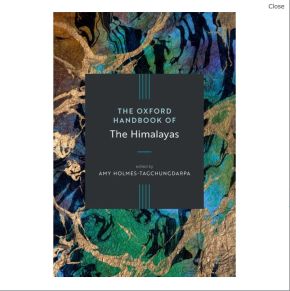
Decolonizing “Tibetan” and “Himalayan” Studies: Empire, Ethnicity, and Rethinking Sovereignty, an Introduction

by

Who are Tibetans? How have they been framed as objects for study across time? For earlier Western academics and the audiences who read their work, Tibetans were a people largely defined by religious beliefs and institutions. In the chapter that follows, I argue that this emphasis in early Tibetan Studies set a precedent for sidelining Tibetan sovereignty as a central concern in both scholarship and in real-world politics, a trend that continues to impact the field and Tibetan lives today.

When Tibetan Women Speak, Are We Heard? Challenging Etic Frameworks in Tibetan Gender Studies

by

There is a growing trend among non-Tibetan scholars—primarily those from Western or Chinese backgrounds—to analyze Tibetan women’s experiences through frameworks focused on gendered roles, marginality, or violence in relation to Tibetan men. I have written about how such analyses often overlook critical and temporal factors, such as intersectionality (Lokyitsang 2015) and the historical and ongoing violence and marginalizing policies imposed by Chinese authorities (Lokyitsang 2017a). Moreover, these scholars rarely interrogate their own etic (outsider) assumptions embedded in their own analytics.

Within these frameworks, Tibetan women’s emic (insider) scholarly perspectives are routinely sidelined—especially when some of us turn the analytical lens back on these scholars to examine the power dynamics of their positionalities, and to critique their uncritical use of categories like “modernity” and “gender empowerment.” These categories, rooted in Western Enlightenment ideals, have already been challenged by Black and Indigenous feminist thinkers as embedded in white supremacist frameworks and serving the interest of imperial projects.