Tag Archive: China

The Art of China’s Colonialism: Constructing Invisibilities in Tibetan History and Geography

by

What does an ethnographic discourse on the invisibility of a colonial empire in the 21st century look like? What does that invisibility contribute to, or rather take away from, the experiences of Tibetans inside and outside Tibet? In this post, I examine the historical and contemporary discourses on Tibet that frame Tibet as either not colonized or about human rights, which, I argue, silences Tibetan aspirations for Nationhood. Aside from contextualizing Tibetan subjectivities, I contribute to the ongoing discourse on how ethnographic narratives can re-construct the invisibility of existing colonial empires and justify their presence as a given right rather than foreign.

Fear of the Unknown

by

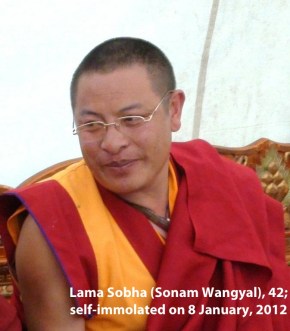
For the past month, as the number of self-immolations climbed, my adviser and I sat down several times, trying to figure out activities we can do to highlight the situation better here at the University I’m currently studying at. Then last week, I saw the video campaign with messages to world leaders launched by SFT spreading in the web-sphere.

Death by China

by

This past week, I saw the film ‘Death by China’. This film is based on the book written by Peter Navarro and Greg Autry. I didn’t know what to expect going into this… Continue reading

When Gyalthang became Shangri-La: a critical reading

by

Ben Hillman–a Senior Lecturer at the Crawford School of public policy, Australian National University–wrote an article called “China’s many Tibets: Diqing as a model for ‘development with Tibetan characteristics?’” (2010). He details the economic success, through the government-funded tourist industry, of Shangri-La, a Tibetan town in Kham, as a model that the Chinese authorities can follow for “China’s many other Tibets”. However, in his eager attempt to support his argument for Shangri-La as a successful model, Hillman fails to acknowledge China’s historical role in that region, the popular resistance that occurred before and during the time period he covers, or further analysis of local involvement in the tourist industry.

J’adore mon pays, le Tibet

by

Earlier this month, I took a little weekend trip to Montreal, in the province of Quebec. While Ottawa, where I live, is a city that is more or less bilingual with most people… Continue reading

Mao in Tibetan disguise: History, ethnography, and excess

by

Guest post by Carole MCGRANAHAN, University of Colorado. (The original academic article with footnotes and bibliography can be found and downloaded here at http://www.haujournal.org/index.php/hau/article/view/65) What does ethnographic theory look like in dialogue with… Continue reading

How do you teach self-immolations in Tibet?

by

Last Thursday, April 5th, I gave a talk on the self-immolations at my school, followed by a Q&A. I was a bit nervous. How does one begin to try to make sense out of such a powerful yet painful act, without sensationalizing, to people who don’t know much about Tibet in the span of one hour?

A journey through Hip Hop and Tibet

by

Tenzin Wangchuk, MC name Exiled Prophet, shares his journey of growing up in New York and discovering Tibet through hip hop. He is the co-founder of Mind of a Monk, a Tibetan music… Continue reading

Spoken Words by Jigme Ritzekura

by

We’d like to pay our respect and prayers to Jamphel Yeshi who passed away last night. Tibetans in India are doing everything they can to carry his and those insides, voices to Hu… Continue reading

Tubote, Tibet, and the Power of Naming

by

In response to my previous post, “The Significance of Naming or Terming,” Professor Elliot Sperling has offered a more in-depth look at this significance in the following article, originally published on Rangzen Alliance