Category Archive: indigeneity

Understanding Asian Settler-Colonial Imperialisms and Indigeneities, China in Tibet

by

From the article: Are Tibetans Indigenous? The Political Stakes and Potentiality of the Translation of Indigeneity

How does settler-colonial imperialism operate in Asia, and what are the ways in which Asian Indigeneities become mobilised? To address this question, in 2017, I brought together scholars who are observing various settler-colonial and imperial dynamics and developments across Asia for a panel discussion titled ‘Asian Settler-Colonialisms and Indigeneities’ at the 116th annual American Anthropological Association conference. At that time, scholarly considerations about Asian land and resource extraction emphasised capitalism, development, and governmentality, with scant consideration of settler colonialism, even though the last remains a vital framework for understanding the structural nature of imperial projects (Wolfe 2006). Even the literature that adopted this frame drew its analysis primarily from Euro-American–centred examples, implicitly suggesting that settler colonialism is an innately Western phenomenon (Pels 1997). Yet, capitalist developments with imperial consequences continue to impact Asia at varying scales (Tsing 2005). Such contemporary developments, alongside long Asian imperial histories, including those of China, Japan, and India, complicate this assumption. This provokes questions such as: How does settler domination work when those involved in it are neither white nor from the West? How can we critically engage with this while not Orientalising this history as a cultural peculiarity or delinking it from the deep influence of Western empires?
Are Tibetans Indigenous?

by

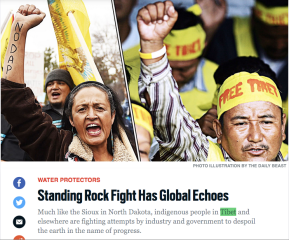
“Are Tibetans Indigenous? It depends who you ask. While Tibetans exposed to Indigenous sovereignty movements such as Idle No More and NoDAPL identify with indigeneity currently, the term was officially rejected decades earlier by the Tibetan apparatus in diaspora. Drawing on recent scholarship by Indigenous scholars, indigeneity as a term was a colonial construct. It was through this racial construction that the settler state proliferated the domination of Indigenous lands and bodies. However, many Indigenous organizers argue that the recent use of the term in mobilizing political solidarity across the globe against imperial-setter colonial-capitalist-governmentality has made the word too essential to abandon all together. Instead, Indigenous scholars have proposed ways of rethinking indigeneity that is decolonial. My paper draws on this scholarship to examine why Tibetans refused to identify as indigenous before yet claim it now. Using an historical approach, I examine the kinds of political stakes that were at risk in claiming the terminology earlier versus now. And why current redefinition of the word appeals to a younger generation of Tibetans growing up exposed to Indigenous movements in North America.”

Tare Lhamo and Namtrul Rinpoche: Courtship & Healing in times of (Cultural Revolution) Degeneration

by

As discussed in previous chapters of Love Letters from Golok: A Tantric Couple in Modern Tibet, Holly Gayley stresses how Tare Lhamo and Namtrul Rinpoche saw their religious engagement and activities in tandem with reviving Tibetan Buddhist culture following the destruction of the Chinese-led Cultural Revolution. Before Tare Lhamo and Namtrul Rinpoche began their activities in reviving Tibetan Buddhism during the 1980s and 1990s together as a tantric couple, they began their official courtship through letters in the 1970s. These letters from the 1970s played a crucial role, argues Gayley, in shaping the couple’s future activities that came to fruition later. The following chapters engage these letters closely to consider how the couple came to view one another and their future together as a tantric couple who would embark on healing Tibetan traumas through Indigenous and Buddhist idioms.

When Tibetan Women ruled Tibet

by

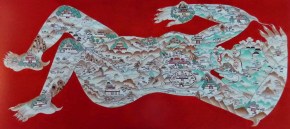
she realizes the demoness Srin, who represents the Tibetan landscape itself, is causing all the difficulties. To subdue her, they build a total of thirteen Buddhist temples, some of which still stand today in places like Bhutan (39), to pin her down on her back. Four in the inner realm of Tibet to pin her shoulder and hip. Four at the border areas, pinning her knees and elbows. Four at the boarders beyond to pin her hands and feet. And finally, one at the Jo-khang, symbolizing her heart and considered the center of Tibet (38). Thus Srin is subdued and Buddhism can reign over Tibet. Besides Buddhist domination of Srin, what is this myth really about? And why is the demoness gendered as female?