Category Archive: colonialism

Are Tibetans Indigenous?

by

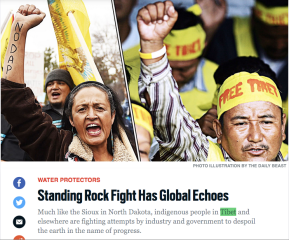
“Are Tibetans Indigenous? It depends who you ask. While Tibetans exposed to Indigenous sovereignty movements such as Idle No More and NoDAPL identify with indigeneity currently, the term was officially rejected decades earlier by the Tibetan apparatus in diaspora. Drawing on recent scholarship by Indigenous scholars, indigeneity as a term was a colonial construct. It was through this racial construction that the settler state proliferated the domination of Indigenous lands and bodies. However, many Indigenous organizers argue that the recent use of the term in mobilizing political solidarity across the globe against imperial-setter colonial-capitalist-governmentality has made the word too essential to abandon all together. Instead, Indigenous scholars have proposed ways of rethinking indigeneity that is decolonial. My paper draws on this scholarship to examine why Tibetans refused to identify as indigenous before yet claim it now. Using an historical approach, I examine the kinds of political stakes that were at risk in claiming the terminology earlier versus now. And why current redefinition of the word appeals to a younger generation of Tibetans growing up exposed to Indigenous movements in North America.”

Tare Lhamo and Namtrul Rinpoche: Courtship & Healing in times of (Cultural Revolution) Degeneration

by

As discussed in previous chapters of Love Letters from Golok: A Tantric Couple in Modern Tibet, Holly Gayley stresses how Tare Lhamo and Namtrul Rinpoche saw their religious engagement and activities in tandem with reviving Tibetan Buddhist culture following the destruction of the Chinese-led Cultural Revolution. Before Tare Lhamo and Namtrul Rinpoche began their activities in reviving Tibetan Buddhism during the 1980s and 1990s together as a tantric couple, they began their official courtship through letters in the 1970s. These letters from the 1970s played a crucial role, argues Gayley, in shaping the couple’s future activities that came to fruition later. The following chapters engage these letters closely to consider how the couple came to view one another and their future together as a tantric couple who would embark on healing Tibetan traumas through Indigenous and Buddhist idioms.

The Exceptional Tare Lhamo: Transcending Gender Through Agentive Means

by

This is a continuation of my project to engage historic female figures of Tibet. Tare Lhamo is especially interesting because she was born before China’s invasion of Tibet, she lived through the invasion, followed by Culture Revolution until its end, and was part of the religious cohort in Tibet who began reviving Tibetan Buddhism from the destruction of Culture Revolution. She becomes an important figure to consider when we think about different subjectivities of Tibetan women in Tibetan history. I hope you’ll find the following analysis useful.

Familiar Heartbreaks: Review of McGranahan’s “Arrested Histories: Tibet, the CIA, and Memories of a Forgotten War”

by

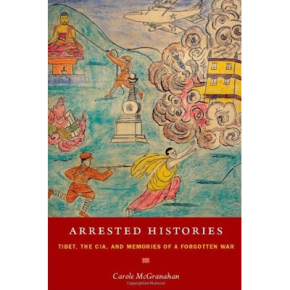
Carole McGranahan’s Arrested Histories: Tibet, the CIA, and Memories of a Forgotten War is an ethnography of heartbreak (2010). A heartbreak that began with the loss of Tibet. Every time I read this book, I am reminded of people from my childhood who were of the generation that was raised in Tibet but later died in exile. The same people who would share stories of Tibet prior to its invasion. These stories often began with joy, but would end abruptly with sadness—a sadness I did not understand as a child, but was taught about and grew familiar with as I grew older. This sadness, heartbreak, is captured and historicized in this book.

Decolonizing Ethnographic ‘Responsibility’: Towards a Decolonized Praxis

by

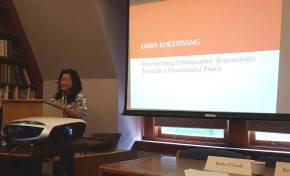
what happens when the question of responsibility becomes one of obligation; choice becomes necessity, and crisis exists as an everyday reality?

The Chang ma Ama las of Dharamsala

by

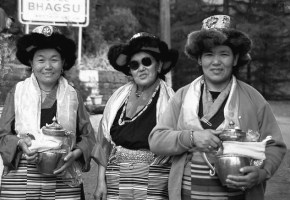
The following post is a section in Ch. 2 “There Is a Tension in Our Hearts” from the book Echoes from Dharamsala by Keila Diehl (2002, p57-62).

The Art of China’s Colonialism: Constructing Invisibilities in Tibetan History and Geography

by

What does an ethnographic discourse on the invisibility of a colonial empire in the 21st century look like? What does that invisibility contribute to, or rather take away from, the experiences of Tibetans inside and outside Tibet? In this post, I examine the historical and contemporary discourses on Tibet that frame Tibet as either not colonized or about human rights, which, I argue, silences Tibetan aspirations for Nationhood. Aside from contextualizing Tibetan subjectivities, I contribute to the ongoing discourse on how ethnographic narratives can re-construct the invisibility of existing colonial empires and justify their presence as a given right rather than foreign.

Race as Common Sense: How the Chinese State Legislates and Normalizes Racism

by

Han chauvinism, in other words, Racism, seemed to have been the big issue in 1953. It’s too bad that this report only highlights a small fraction of the officials that felt this way then.

I’ve been reading Ann Stoler’s book, “Carnal Knowledge and Imperial Power” and it has been making me think a lot about the role of the State in creating and/or encouraging cultural attitudes, such as racism, through the implementation of laws. Although Stoler’s archival ethnography focuses more on how these legislation affected the intimate lives of mixed children and their white/native parents with a focus on women at that time; for the purposes of this post, I want to center this discussion on the State.