Category Archive: sovereignty

Understanding Asian Settler-Colonial Imperialisms and Indigeneities, China in Tibet

by

From the article: Are Tibetans Indigenous? The Political Stakes and Potentiality of the Translation of Indigeneity

How does settler-colonial imperialism operate in Asia, and what are the ways in which Asian Indigeneities become mobilised? To address this question, in 2017, I brought together scholars who are observing various settler-colonial and imperial dynamics and developments across Asia for a panel discussion titled ‘Asian Settler-Colonialisms and Indigeneities’ at the 116th annual American Anthropological Association conference. At that time, scholarly considerations about Asian land and resource extraction emphasised capitalism, development, and governmentality, with scant consideration of settler colonialism, even though the last remains a vital framework for understanding the structural nature of imperial projects (Wolfe 2006). Even the literature that adopted this frame drew its analysis primarily from Euro-American–centred examples, implicitly suggesting that settler colonialism is an innately Western phenomenon (Pels 1997). Yet, capitalist developments with imperial consequences continue to impact Asia at varying scales (Tsing 2005). Such contemporary developments, alongside long Asian imperial histories, including those of China, Japan, and India, complicate this assumption. This provokes questions such as: How does settler domination work when those involved in it are neither white nor from the West? How can we critically engage with this while not Orientalising this history as a cultural peculiarity or delinking it from the deep influence of Western empires?
Sovereignty in Settler Colonial Times on American Ethnologist

by

Prior to exile, Tibetan kinship alliances had tended to function along biological/affinal (clan) and regional (hometown) lines. As I show in this historical and ethnographic essay, the conditions of exile also worked to configure new kinship ties along national lines—communities in exile became family to each other, and in turn, the nation itself was imagined as family.

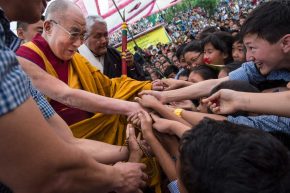
In exile, schools became key sites in which these novel forms of kinship and belonging were cultivated. In 1960, the Dalai Lama’s administration opened nurseries for children in exile that later became boarding schools (Dalai Lama 1991). Students from this school eventually became adults who sustained the next phase of exile for Tibetans escaping the policies of the Cultural Revolution that were imposed upon Tibet. Today, there are over 70 Tibetan refugee schools in Nepal and India that have graduated over 25,000 students. These educational institutions, which were developed, run, and attended by Tibetans, both sustained and fostered new forms of solidarity and citizenship that in turn bolstered the project of sovereignty-in-exile.

Decolonizing ‘Tibetan’ Studies: Empire, Ethnicity, and Rethinking Sovereignty at Humboldt University

by

Who are Tibetans? How have they been framed as objects for study across time? For earlier Western academics and the audiences who read their work, Tibetans were a people largely defined by religious beliefs and institutions. In this presentation, I argue that this emphasis in early Tibetan Studies set a precedent for sidelining Tibetan sovereignty as a central concern in both scholarship and in real world politics, a trend which continues to impact the field and Tibetan lives today. While researchers were interested in understanding the structural authority and functions of the sovereign, their Orientalizing renderings often sidelined analysis of Tibet’s geopolitical history and developments in central Asia as an empire and nation. This deprioritizing necessarily ignores the rich body of Indigenous history transmitted through literary production and oral traditions produced by Tibetans for Tibetan audiences that dates back centuries. A chronological examination of scholarly productions on Tibet undertaken predominantly by Western scholars reveals the making of Tibetan Studies as a Western academic subject based on ideas and interpretations of Tibetans by Westerners. Similarly, modern Chinese scholarship on Tibet has been heavily influenced by Orientalist Western traditions. Both demonstrate the importance of acknowledging histories of representation.

Are Tibetans Indigenous?

by

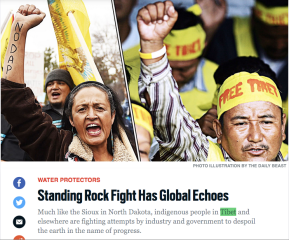
“Are Tibetans Indigenous? It depends who you ask. While Tibetans exposed to Indigenous sovereignty movements such as Idle No More and NoDAPL identify with indigeneity currently, the term was officially rejected decades earlier by the Tibetan apparatus in diaspora. Drawing on recent scholarship by Indigenous scholars, indigeneity as a term was a colonial construct. It was through this racial construction that the settler state proliferated the domination of Indigenous lands and bodies. However, many Indigenous organizers argue that the recent use of the term in mobilizing political solidarity across the globe against imperial-setter colonial-capitalist-governmentality has made the word too essential to abandon all together. Instead, Indigenous scholars have proposed ways of rethinking indigeneity that is decolonial. My paper draws on this scholarship to examine why Tibetans refused to identify as indigenous before yet claim it now. Using an historical approach, I examine the kinds of political stakes that were at risk in claiming the terminology earlier versus now. And why current redefinition of the word appeals to a younger generation of Tibetans growing up exposed to Indigenous movements in North America.”

Secularism, Purity, and the need for Unity: Learning from Srin, King Yeshe O, and Secular Leadership in Amdo Labrang

by

Over the last few months, conversations taking place on Tibetan social media consisted of topics regarding secular modernity, concepts of Tibetan purity, and by the seeming lack of interest in turning to lived Tibetan histories as a way to engage these topics. To be fair, I noticed some participants try to actually stress Tibetan histories to acknowledge that these topics are nothing new when viewed through our historical framework as a people, and also how these concerns can be engaged using our own historical knowledges as lessons. In agreement with these concerns, I’ve dug up an old essay from 2015 that looks at Tibetan histories across time, space, place, and figures that were dealing with notions of Pan-Tibetan identities and governmentalities, with the restructuring and mixture of old and new traditions, and with notions of the secular and the religious, all of which take place in different places and times across the Tibetan plateau.