Category Archive: India-Tibet

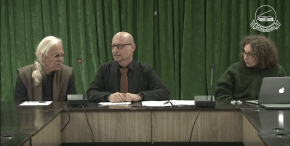
Tsering Yangzom Lama, Dawa Lokyitsang and Natalie Avalos at Jaipur Lit Festival

by

Long term readers of Lhakar Diaries know that Tsering Yangzom Lama is one of our founders. So it is a pleasure to share a video of us in conversation talking about her book, “We Measure the Earth with our Bodies,” and topics such as: the centrality of land in how we as Tibetans imagine and enact ourselves in the world, colonial dispossession, the coloniality of Tibetan Studies and the extractive nature with which some of its scholars engage Tibet/ans, theft of sacred Tibetan objects in the making of expertise and museums, intentionality in Tibetan Buddhist ritual practices of compassion and how its not about just the self but about all.

This conversation took place at the Jaipur Literature Festival in Boulder, CO on September 23rd, 2023.

6 Poems on Life in Exile and Of Home from “A Thousand Parallel Lives” by Tenzin Pema Chashar

by

The first poem “The Young, the Holy, and the Wealthy” is one version of my interpretation from the many stories I’ve been told about how key members of a family, who had been identified for torture/prison/thamzing, were given fair warning from those whose loyalty the Chinese tried to buy but couldn’t. 

The second poem “Here Vs. There” is something I wrote from my memory of listening to the elders talk constantly about how everything was always that much better or more abundant or brighter or bigger (even the ravens, as I recall) in Tibet. So it’s written from the vantage of someone who is about to set off for life in exile and has these hopes for how this new life/home should be.

The third poem “Wait for Me” is something I wrote from the perspective of so many of our parents and elders who had to leave their parents or children and loved ones behind as many of them had to make a hasty escape. However, many stayed somewhere close to the borders, waiting for their loved ones to join them, and not making the final descent into exile because of their belief too that the issue of Tibet would be a temporary one.

The fourth poem “Call to Arms” is about early life in exile when Tibetans in nearly every settlement called on their youth to practice ‘March Past’ every morning (with wooden toy guns) so that they would be ready if ever there was a war with the Chinese.

The fifth poem “Stone Bench” is about life in exile in the 1980’s and 1990’s when the longing for home (where the life they had left behind was home) was still palpable and a focal point of all conversations between the elders.

Who is a Pure Tibetan? Identity, Intergenerational History, and Trauma in Exile

by

How do Tibetans themselves conceptualize being Tibetan? Here, I explore this question through an ethnographic illustration of recent public discussions between Tibetans online, and the kinds of reactions these exchanges provoke. Their discussions were often about purity—what makes someone a pure Tibetan? Purity was needed, argued many, to preserve the Tibetan identity. For Tibetans inside and outside Tibet, preservation was a project that Tibetans collectively began after the Chinese invasion. Many saw purity as necessary to promote the project of cultural and identity preservation in colonized Tibet and exile-diaspora. Purity offered possibilities for survival and continuity of the culture. But what does this purity look like?

Are Tibetans Indigenous?

by

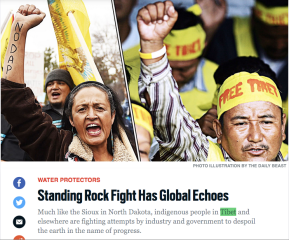
“Are Tibetans Indigenous? It depends who you ask. While Tibetans exposed to Indigenous sovereignty movements such as Idle No More and NoDAPL identify with indigeneity currently, the term was officially rejected decades earlier by the Tibetan apparatus in diaspora. Drawing on recent scholarship by Indigenous scholars, indigeneity as a term was a colonial construct. It was through this racial construction that the settler state proliferated the domination of Indigenous lands and bodies. However, many Indigenous organizers argue that the recent use of the term in mobilizing political solidarity across the globe against imperial-setter colonial-capitalist-governmentality has made the word too essential to abandon all together. Instead, Indigenous scholars have proposed ways of rethinking indigeneity that is decolonial. My paper draws on this scholarship to examine why Tibetans refused to identify as indigenous before yet claim it now. Using an historical approach, I examine the kinds of political stakes that were at risk in claiming the terminology earlier versus now. And why current redefinition of the word appeals to a younger generation of Tibetans growing up exposed to Indigenous movements in North America.”

Tibetan Refugees & the Negotiation of Relatedness: Semi-Orphans of the 1960s & 1990s

by

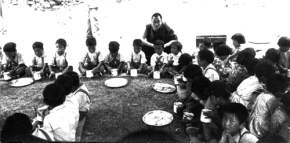
During exile’s initial construction, orphaned and semi-orphaned Tibetan refugees from the 1960s promoted and practiced terms of relatedness at refugee schools that were fairly open. However, the desire to construct biological family outside refugee schools to safeguard vulnerable conditions of exile caused the terms of relatedness to narrow by the time semi-orphan children from Tibet arrived in the 1990s. What caused such a shift? What happens when a group desires forms of relatedness not contingent on the construction of a traditional and biological family?

“Tibet and Modernity” with Sperling, Venturi, & Vitali: What is Tibetan modernity?

by

I think Dr. Sperling and Dr. Venturi are correct in saying we need to be clear when we use the word ‘modern’ in Tibetan studies. However, in such an engagement, following Dr. Vitali’s warnings, we also need to be careful we do not reproduce the same problems in reifying notions of ‘tradition,’ and assumptions of cultures as belonging on a singular (Euro-American) evolutionary trajectory that is assumed under the banner of the singular modern. This is the same critique that has been launched against academia in general for over 70 years, and something Tibetan studies has only recently begun to consider.

Non-Refugee Refugees: Tibetans’ Struggles for Visibility in Bureaucratic India

by

The struggle for visibility (documents) has always played a central role for Tibetans living in exile, especially for those living in India and Nepal. In this post, I look into this struggle that Tibetans in India face as newly arrived Tibetans from Tibet (second half) and Tibetans born and raised there (first half). During my stays in Dharamsala, India, I came across several different socio-cultural-political-economic phenomenons that have been emerging as a result of the lack of visibility for Tibetans living as, what I refer to as non-refugee refugees, in bureaucratic India. In the following, I take a closer look at one of these emerging intercultural phenomenon currently shaping the possibility of existing on paper for Tibetans especially from Tibet that bureaucratic India has yet to offer.